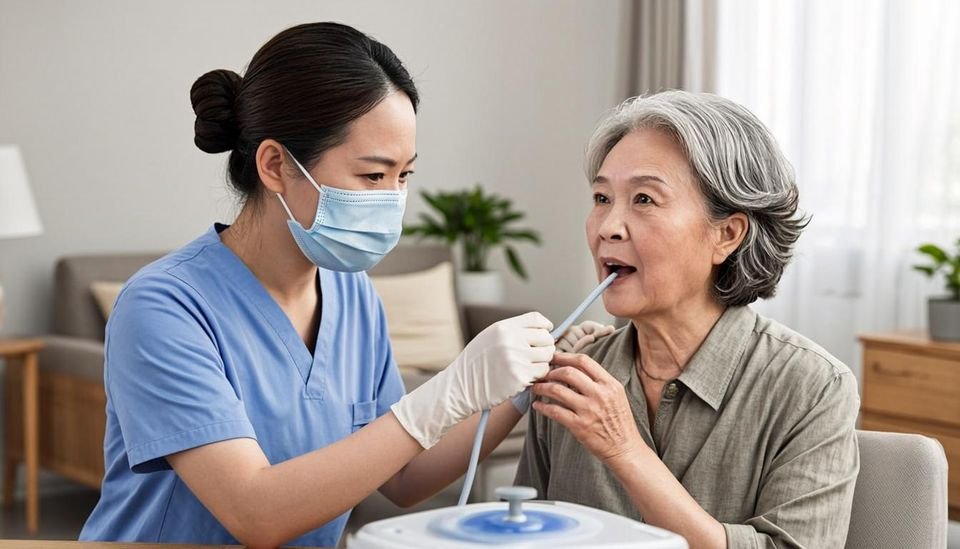
What to Expect During Tracheostomy Care
If you have booked tracheostomy care for the first time, understanding the process helps you prepare and get the most out of the service. The experience typically follows a structured sequence: booking and scheduling, pre-visit preparation, the actual service delivery, and post-visit follow-up. Each step is designed to ensure patient safety, comfort, and clinical effectiveness.
When you book tracheostomy care with Hum Home Care, our care coordination team collects relevant medical information including the patient's condition, current medications, allergies, and any specific instructions from their treating physician. This information is shared with the assigned tracheostomy-trained before they arrive, allowing them to prepare appropriately and bring the correct equipment and supplies. For diagnostic services, we also confirm any preparation requirements such as fasting for blood tests or wearing loose clothing for ultrasound examinations.
During the visit, the tracheostomy-trained will begin with a brief assessment or patient introduction, explain what they are going to do, and then proceed with the service. The entire process is conducted professionally, with respect for the patient's privacy and comfort. After the service is complete, the tracheostomy-trained provides a summary of findings, instructions for any follow-up care, and answers any questions the patient or family may have. Results from diagnostic tests are typically available within 24 hours and are shared digitally.
What Makes This Service Reliable in Lahore
Family training for tracheostomy care is a critical component of successful home healthcare. When family members are properly trained, they can provide safe and effective support between professional visits, reducing anxiety and improving patient outcomes. Training programmes should cover the theoretical basis of the procedure or care activity, hands-on demonstration and practice, recognition of warning signs that require immediate medical attention, and proper documentation of care activities. At Hum Home Care, family training is conducted by experienced professionals who use clear, practical teaching methods and provide reference materials in both English and Urdu.
Key skills that family members should develop include proper hand hygiene technique, correct use of medical equipment, medication management (right dose, right time, right route), and basic vital sign monitoring. For tracheostomy care, specific skills may include suctioning technique, wound dressing changes, range-of-motion exercises, or blood glucose monitoring depending on the patient's needs. The training should also cover emergency response procedures — what to do if the patient's condition suddenly deteriorates, when to call an ambulance, and how to perform basic life support while waiting for help to arrive. In Lahore, emergency services can be reached by calling 1122, and the family should have the nearest hospital's emergency number readily available.
Ongoing support and refresher training are essential for maintaining family caregivers' confidence and competence. Skills can degrade over time if not regularly practised, and care protocols may need to be updated as the patient's condition changes. Hum Home Care provides periodic refresher sessions and is available for telephone consultation if family members have questions between visits. We also connect families with local support groups and community resources in Lahore that can provide additional emotional and practical support. Well-trained family caregivers are the backbone of successful home healthcare, and investing in their education and support ultimately leads to the best outcomes for the patient.
The demand for tracheostomy care in Lahore has grown substantially in recent years, driven by several factors. Lahore's population has expanded rapidly, with an estimated 13 million residents, placing significant pressure on hospital infrastructure. Traffic congestion makes regular hospital visits time-consuming and physically taxing, particularly for elderly patients and those with chronic conditions. Additionally, the COVID-19 pandemic accelerated the adoption of home-based healthcare services, as families became more aware of the infection risks associated with hospital visits. Today, home healthcare is recognised as a safe, effective, and often preferred alternative for a wide range of medical services.
Frequently Asked Questions
How do I prepare for tracheostomy care?
Preparation depends on the specific service. For blood tests, you may need to fast for 8-12 hours. For ultrasound, wear loose comfortable clothing. For nursing care, have the patient's medical records and current medications readily available. Our team provides specific preparation instructions when you book.
How long does a tracheostomy visit take?
The duration varies by service type. Diagnostic tests typically take 20-45 minutes. Nursing care shifts are usually 12 hours. Doctor consultations last 20-30 minutes. Our care coordination team provides an estimated duration when you book so you can plan accordingly.
Can a family member be present during the visit?
Absolutely. We encourage family members to be present during home healthcare visits. This helps the family understand the patient's condition, learn care techniques, and ask questions. For elderly patients or children, having a familiar family member present also reduces anxiety and improves cooperation with the healthcare professional.
For professional tracheostomy care in Lahore, Hum Home Care offers airway management certified tracheostomy-trained nurses, 24/7 availability, and physician-supervised care plans. Learn more about our tracheostomy care or call +92 325 0600 666 to book. We serve DHA, Johar Town, Gulberg, Model Town, Bahria Town, and all Lahore areas.