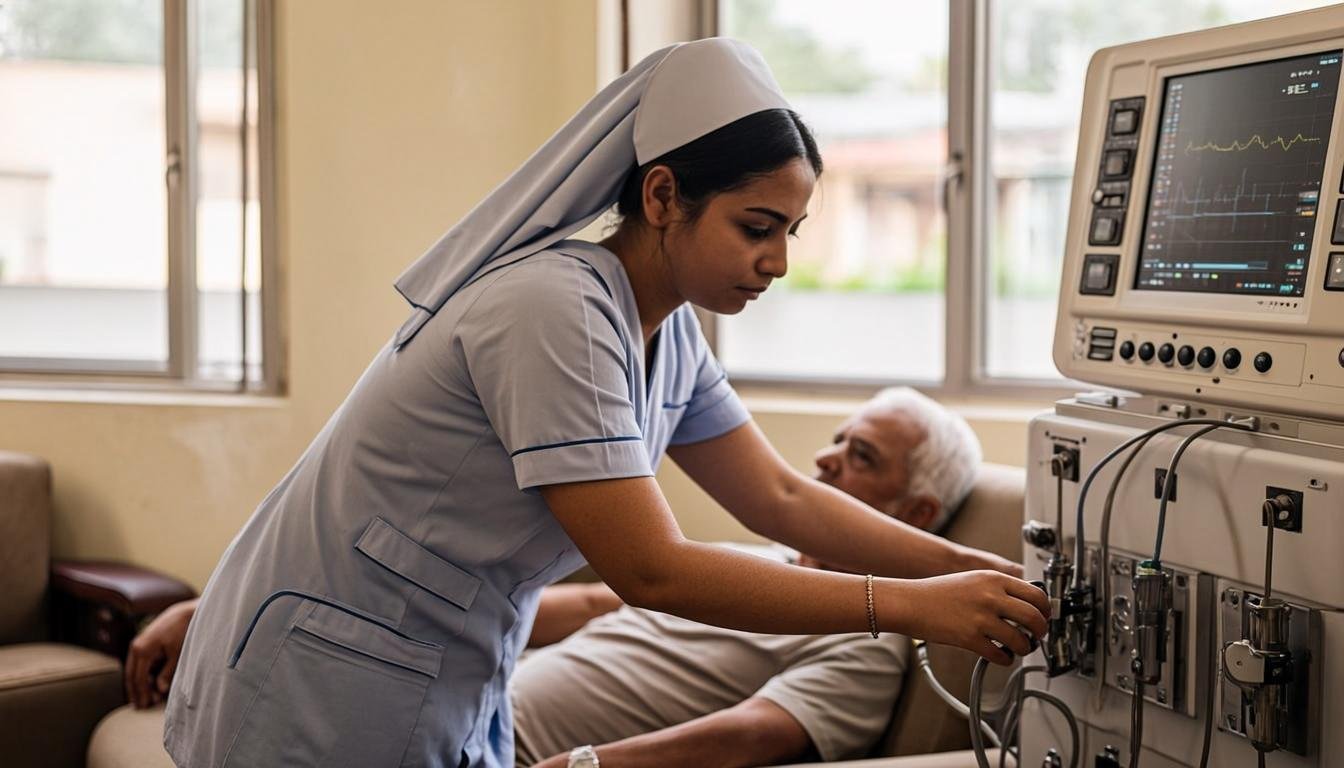
Kidney disease is a growing health crisis in Pakistan. According to the Pakistan Kidney Foundation, approximately 20 million Pakistanis suffer from some form of kidney disease, and the number of patients requiring dialysis continues to rise each year. In Lahore, major dialysis centres at Shaukat Khanum Hospital, Sheikh Zayed Hospital, Jinnah Hospital, and various private dialysis units are often operating at full capacity, with patients waiting hours for their turn. For many families, home dialysis offers a practical, cost-effective alternative that dramatically improves the patient's quality of life.
Understanding Dialysis: A Quick Overview
Dialysis is a treatment that performs the function of the kidneys when they can no longer do so adequately. It removes waste products, excess fluid, and balances electrolytes in the blood. There are two main types of dialysis:
- Haemodialysis (HD): Blood is filtered through an artificial kidney machine (dialyser). This is typically done at a dialysis centre, three times per week, with each session lasting 3-4 hours.
- Peritoneal Dialysis (PD): The lining of the abdominal cavity (peritoneum) acts as the natural filter. A cleansing fluid (dialysate) is introduced into the abdomen through a permanently placed catheter, left for several hours to absorb waste, and then drained out.
For home-based dialysis, peritoneal dialysis is the primary option used in Pakistan, though home haemodialysis is also emerging in some urban centres.
How Peritoneal Dialysis at Home Works
Peritoneal dialysis at home is performed by the patient themselves or with the help of a trained family member or nurse. The process involves a soft, flexible catheter that is surgically placed in the abdomen. This catheter remains in place permanently and is used for all dialysis exchanges.
There are two main forms of peritoneal dialysis:
Continuous Ambulatory Peritoneal Dialysis (CAPD)
In CAPD, the patient performs 3-4 exchanges per day manually. Each exchange takes about 30-40 minutes. The patient connects a bag of dialysate to the catheter, allows the fluid to flow into the abdomen (fill time), leaves it in for 4-6 hours (dwell time), and then drains it out (drain time). The process is simple enough that most patients can learn to do it themselves after proper training. It can be performed while the patient goes about their normal daily activities.
Automated Peritoneal Dialysis (APD)
In APD, a machine called a cycler performs the exchanges automatically, typically overnight while the patient sleeps. The machine fills and drains the abdomen multiple times over 8-10 hours. This is particularly convenient for patients who work during the day or prefer not to perform manual exchanges. The cycler machine is provided by the dialysis service provider and set up in the patient's bedroom.
Setting Up for Home Dialysis in Lahore
Setting up home dialysis requires a clean, dedicated space in the home. The area should be well-lit, free of dust and pets, and have access to clean water and electricity. For APD, a stable power supply is essential, so many families in Lahore use a UPS (uninterruptible power supply) or generator as backup during loadshedding.
The patient or caregiver undergoes thorough training at a dialysis centre before starting home dialysis. This training typically takes 1-2 weeks and covers the entire dialysis procedure, hygiene protocols, catheter care, recognising signs of infection, and troubleshooting common issues. In Lahore, training is available at Shaukat Khanum Hospital, National Hospital, and several private nephrology clinics.
Cost of Home Dialysis in Lahore
The cost comparison between hospital-based haemodialysis and home peritoneal dialysis is significant:
- Hospital haemodialysis: PKR 3,000 to PKR 8,000 per session, typically 12-13 sessions per month (3 per week), totalling PKR 36,000 to PKR 104,000 per month. Transportation costs to and from the dialysis centre add to this expense.
- Home peritoneal dialysis (CAPD): Approximately PKR 25,000 to PKR 45,000 per month for supplies (dialysate bags, tubing, catheter caps). Monthly follow-up visits to the nephrologist are additional.
- Home peritoneal dialysis (APD): Slightly higher due to the machine rental, approximately PKR 35,000 to PKR 60,000 per month.
Beyond direct costs, home dialysis eliminates travel expenses, reduces the need for a full-time caregiver, and allows the patient to continue working or participating in family life, all of which have significant economic value.
Quality of Life Benefits
Patients who switch from hospital haemodialysis to home peritoneal dialysis consistently report improved quality of life. The benefits include greater flexibility and independence since dialysis is done on the patient's schedule rather than being tied to a hospital's time slot, better preservation of residual kidney function, more liberal diet compared to haemodialysis patients, less fatigue and "washed out" feeling after sessions, the ability to travel (supplies can be shipped to other cities), and reduced exposure to hospital infections. For patients in Lahore, where summer heat and smog make regular hospital visits uncomfortable and potentially hazardous, the ability to dialyse at home is particularly valuable.
Doctor Supervision and Monitoring
Home dialysis does not mean the patient is on their own. Regular supervision by a nephrologist is essential. This typically includes monthly clinic visits for blood tests and assessment, regular phone or video check-ins with the dialysis team, 24-hour availability of the dialysis nurse or coordinator for questions and concerns, and periodic home visits by the dialysis training team. At Hum Home Care, we coordinate with your nephrologist to ensure seamless monitoring and can arrange doctor home visits for patients who have difficulty travelling to the clinic.
Potential Risks and How to Manage Them
Peritonitis, an infection of the abdominal lining, is the most significant risk of peritoneal dialysis. Signs include abdominal pain, cloudy drainage fluid, fever, and nausea. With proper training and strict adherence to hygiene protocols, the risk of peritonitis is low. Other potential issues include catheter site infections, hernia development due to increased abdominal pressure, and weight gain from the dextrose in the dialysate fluid. All of these are manageable with proper medical supervision.
Start Home Dialysis with Professional Support
Transitioning to home dialysis is a decision that should be made with your nephrologist. At Hum Home Care, we support dialysis patients in Lahore with trained nurses, home visits, doctor-on-call services, and medication delivery to ensure your home dialysis journey is safe and successful. WhatsApp us at 03250600666 or book a consultation to discuss how we can support your home dialysis needs.