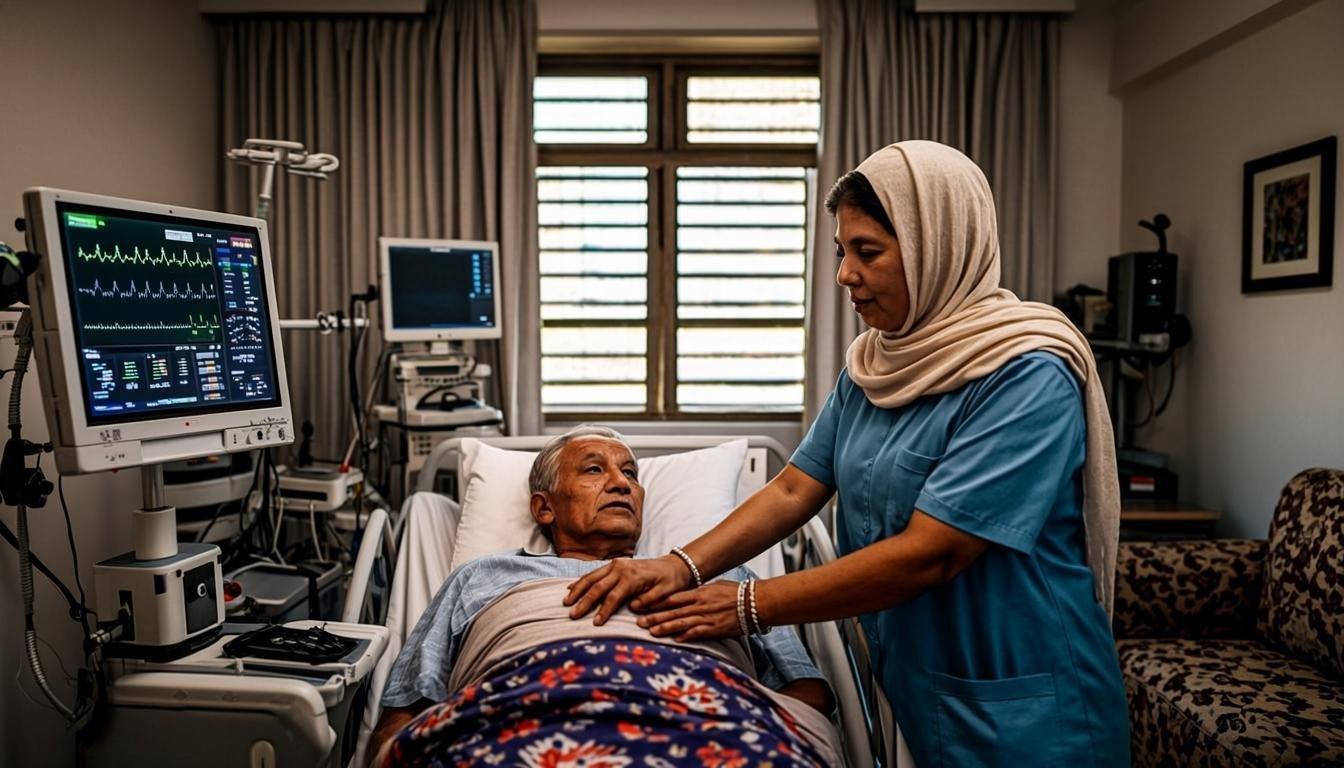
When a loved one requires intensive care, the immediate assumption is that they must stay in a hospital ICU. However, an emerging and increasingly viable option in Lahore is setting up an ICU at home. This concept, which was virtually unheard of in Pakistan a decade ago, has gained significant traction as home healthcare services have matured. But is home ICU really safe? How does the cost compare? And most importantly, is it the right choice for your family member?
This article provides an honest, detailed comparison to help you make an informed decision.
What Does ICU at Home Actually Mean?
ICU at home, sometimes called home-based intensive care, involves replicating the essential monitoring and support capabilities of a hospital ICU within the patient's home. This typically includes a trained ICU nurse present 24 hours a day, vital signs monitoring equipment, oxygen therapy, suction machines, and depending on the patient's needs, a ventilator, cardiac monitor, infusion pumps, and other specialised equipment. A doctor oversees the patient's care remotely through regular check-ins, video consultations, and is available for emergency home visits.
It is important to understand that home ICU is not a replacement for acute hospital care during emergencies. Rather, it is designed for patients who have been stabilised in a hospital but still require intensive monitoring and cannot be safely managed with standard home nursing alone.
Cost Comparison: Home ICU vs Hospital ICU
Cost is often the primary driver for families considering home ICU, and the savings can be substantial. In Lahore's major private hospitals, a private ICU bed typically costs between PKR 25,000 and PKR 80,000 per day, depending on the hospital. This includes the bed charge, nursing care, medications, and basic investigations. At government hospitals like Mayo Hospital or Jinnah Hospital, costs are lower but may come with limitations in privacy, nursing ratios, and availability of beds.
Home ICU in Lahore typically costs between PKR 12,000 and PKR 25,000 per day, which covers the 24-hour ICU-trained nurse, equipment rental, and basic medical supplies. Medications, consumables, and doctor consultation fees are usually additional. Even with these extras, most families find that home ICU costs 30-50% less than a private hospital ICU.
For extended stays of weeks or months, which is common for patients with chronic conditions, tracheostomy, or long-term ventilator dependence, the cost difference becomes enormous. A month in a private hospital ICU can cost PKR 15-24 lakhs, while a month of home ICU typically costs PKR 5-10 lakhs.
Infection Risk: A Major Advantage of Home
Hospital-acquired infections (HAIs) are a serious concern worldwide, and Pakistani hospitals are no exception. Multi-drug resistant organisms, ventilator-associated pneumonia, catheter-related bloodstream infections, and surgical site infections are significantly more common in hospital settings than in the community. For patients with compromised immune systems, prolonged hospital stays carry a cumulative infection risk that can lead to life-threatening complications.
Home environments, by contrast, expose the patient to their own familiar microbiome. The risk of acquiring a resistant infection at home is dramatically lower. This is one of the strongest arguments in favour of home ICU for patients who are medically stable but immunocompromised.
Quality of Care: How Do They Compare?
The quality comparison depends heavily on the home healthcare provider you choose. In a top-tier hospital ICU, the patient has immediate access to specialists, diagnostic facilities, blood bank, operating theatre, and a full resuscitation team. This comprehensive backup is irreplaceable during acute emergencies.
In a well-managed home ICU, the quality of bedside nursing care can match or even exceed hospital care because the nurse is dedicated to a single patient rather than managing two or three patients simultaneously, which is common in many Pakistani hospital ICUs. However, the emergency backup is inherently limited. A home ICU nurse can stabilise a patient and initiate emergency protocols, but transferring to a hospital takes time.
When Is Home ICU Appropriate?
Home ICU is a good option for patients who meet the following criteria:
- Medically stabilised and no longer requiring immediate surgical or interventional procedures
- Requiring ventilator support with a stable respiratory status
- Having a tracheostomy with stable airway
- Requiring continuous IV medications such as inotropes or pain management infusions
- Needing 24-hour vital signs monitoring for chronic conditions
- Recovering from a prolonged ICU stay and transitioning to long-term care
- In palliative or end-of-life care situations where the family prefers the patient to be at home
When Home ICU Is NOT Appropriate
Home ICU is not suitable if the patient requires any of the following:
- Active haemodynamic instability requiring immediate intervention
- Ongoing need for surgeries or invasive procedures
- Complex diagnostic workup requiring advanced imaging and laboratory support
- Unstable cardiac rhythm requiring immediate cardioversion or advanced cardiac support
- Acute respiratory failure that may require escalation of ventilator support
What Equipment Is Needed at Home?
The specific equipment depends on the patient's condition, but a standard home ICU setup may include a patient bed with side rails and an air mattress, cardiac monitor with pulse oximetry and blood pressure monitoring, oxygen concentrator or oxygen cylinders with flow meter, suction machine, nebuliser, IV infusion pump, syringe pump, ventilator (if the patient is ventilated), emergency resuscitation kit, and a glucometer and thermometer. A professional home ICU provider like Hum Home Care will supply, install, and maintain all necessary equipment as part of the service package.
The Emotional and Psychological Advantage
Beyond the clinical and financial considerations, there is a profound psychological benefit to receiving care at home. Hospital ICUs are stressful, disorienting environments with constant noise, bright lights, sleep disruption, and limited visiting hours. Being at home surrounded by family provides emotional comfort, reduces anxiety, and has been shown to positively influence healing outcomes. In Pakistani culture, where family support is deeply valued, the ability to be with a loved one continuously during their illness provides immeasurable comfort to both the patient and the family.
Discuss Your Home ICU Needs with Us
Deciding between hospital ICU and home ICU is a significant decision that should be made in consultation with the patient's medical team. At Hum Home Care, we provide free assessments to help families determine whether home ICU is appropriate for their situation. Our ICU-trained nurses, doctors, and equipment are ready to provide hospital-grade care at home across Lahore. WhatsApp us at 03250600666 or request a free home ICU assessment to learn more.