A stroke is one of the most devastating medical events a family can face. In Pakistan, stroke is a leading cause of disability, with an estimated 350,000 new cases reported annually. In Lahore alone, major hospitals such as Sheikh Zayed Hospital, Jinnah Hospital, Services Hospital, and General Hospital see hundreds of stroke patients each month. While the acute management of stroke happens in the hospital, the real journey of recovery takes place at home, often spanning months or even years.
This guide is designed to help families in Lahore understand what to expect after their loved one returns home following a stroke and how to create the best possible environment for recovery.
Understanding Stroke and Its Impact
A stroke occurs when blood flow to a part of the brain is interrupted, either by a blockage (ischaemic stroke, which accounts for about 80% of cases) or by a ruptured blood vessel (haemorrhagic stroke). The effects depend on which part of the brain was affected and how quickly treatment was administered. Common effects include weakness or paralysis on one side of the body (hemiparesis or hemiplegia), difficulty speaking or understanding language (aphasia), difficulty swallowing (dysphagia), vision problems, balance and coordination issues, and cognitive changes including memory problems.
Understanding that stroke recovery is not a straight line but a gradual process with plateaus and setbacks is crucial for families. Patience and consistency are the two most important ingredients in a successful recovery.
The Phases of Stroke Recovery
Acute Phase (First 1-2 Weeks)
This phase occurs in the hospital. The medical team stabilises the patient, determines the type and extent of the stroke, and begins early mobilisation if the patient is stable. During this phase, families should focus on gathering information about the patient's condition, meeting with the rehabilitation team, and starting to plan for home care needs.
Subacute Phase (Weeks 2 to 12)
This is often when the patient transitions from hospital to home. This phase is characterised by the most rapid neurological recovery. The brain's neuroplasticity, its ability to reorganise and form new neural connections, is highest during this period. Intensive rehabilitation during these weeks can significantly influence long-term outcomes. This is the ideal time to begin home-based physiotherapy, occupational therapy, and speech therapy.
Chronic Phase (Beyond 3 Months)
After the initial three months, the rate of recovery typically slows, but meaningful improvement can continue for one to two years or even longer with consistent effort. The focus during this phase shifts from recovery to adaptation, learning new ways to accomplish daily tasks, and maximising independence with whatever abilities the patient has regained.
The Critical Role of Physiotherapy
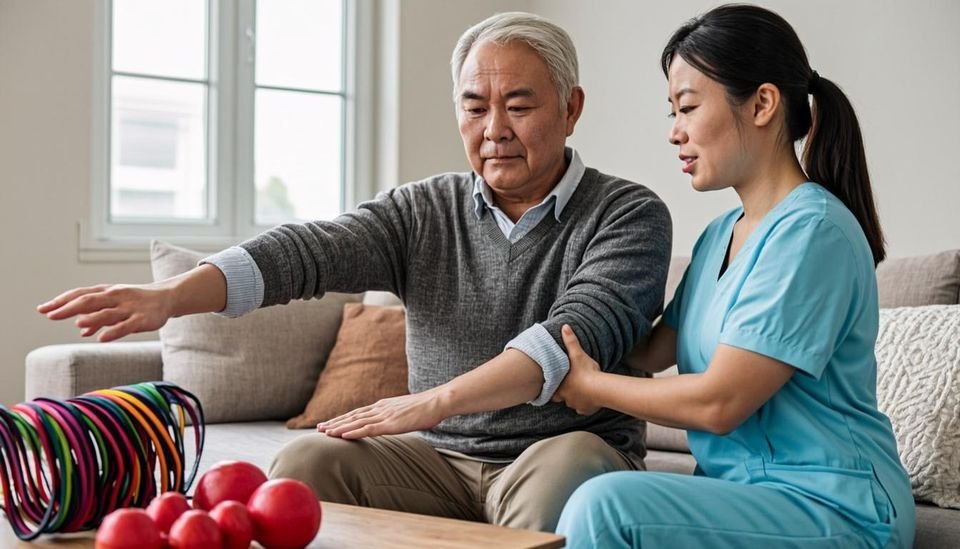
Physiotherapy is the cornerstone of stroke rehabilitation. A qualified physiotherapist works on restoring movement, strength, balance, and functional independence. At home, the physiotherapist can focus on real-life tasks that matter most to the patient, such as getting out of bed, walking to the bathroom, or climbing the stairs in their actual home environment.
Key physiotherapy approaches for stroke recovery include:
- Neurodevelopmental Therapy (NDT): A hands-on approach that facilitates normal movement patterns and inhibits abnormal ones
- Task-specific training: Repeatedly practising specific tasks like reaching, grasping, standing, and walking to strengthen neural pathways
- Balance and coordination exercises: Improving sitting balance, standing balance, and weight shifting to reduce fall risk
- Passive range-of-motion exercises: For patients with severe paralysis, the therapist moves the affected limbs to prevent joint contractures and maintain flexibility
- Gait training: Progressive exercises to retrain walking, starting with supported standing and advancing to walking with or without aids
For stroke patients in Lahore, receiving physiotherapy at home eliminates the challenge of travelling to clinics, which is especially difficult for patients with hemiplegia. A home physiotherapist can also assess the home environment and recommend modifications to make it safer and more accessible.
Speech and Language Therapy
Approximately one-third of stroke survivors experience some form of communication difficulty. Aphasia affects the ability to speak, understand language, read, or write, while dysarthria affects the physical ability to produce clear speech. A speech-language pathologist (SLP) works with the patient to improve communication through structured exercises, alternative communication strategies, and in some cases, communication aids.
Swallowing difficulties (dysphagia) are also common after stroke and can lead to aspiration pneumonia if not properly managed. An SLP assesses swallowing function and recommends safe food textures and feeding techniques. In the Pakistani context, this may mean modifying traditional foods such as adjusting the consistency of daal, making roti softer, or recommending pureed foods initially.
How Families Can Support Recovery
Family support is perhaps the single most important factor in stroke recovery. Here are practical ways families can help:
- Encourage independence: It is natural to want to do everything for a stroke survivor, but doing too much can actually slow recovery. Encourage the patient to do as much as they can for themselves, even if it takes longer.
- Practice therapy exercises between sessions: The physiotherapist and speech therapist will assign home exercises. Consistent practice between professional sessions dramatically improves outcomes.
- Create a safe home environment: Remove tripping hazards, install grab bars, ensure good lighting, and keep the home organised to prevent falls.
- Be patient and positive: Recovery is slow and non-linear. Celebrate small victories and maintain a hopeful, encouraging atmosphere.
- Manage medications: Stroke survivors are typically on multiple medications including blood thinners, blood pressure medications, and cholesterol-lowering drugs. Strict medication adherence is essential to prevent recurrent strokes.
- Watch for depression: Post-stroke depression affects up to 50% of survivors and can significantly hinder recovery. Seek medical help if you notice persistent sadness or withdrawal.
- Attend follow-up appointments: Regular check-ups with the neurologist are important. If travelling is difficult, consider using our home doctor visit service for follow-up consultations at home.
Setting Realistic Expectations
Every stroke is different, and recovery varies widely from person to person. Some patients regain most of their abilities within a few months, while others face long-term disabilities. Factors that influence recovery include the severity and location of the stroke, the patient's age and overall health, the speed of initial treatment, and the intensity and consistency of rehabilitation. Working closely with the medical team and rehabilitation specialists will give you the most accurate picture of what to expect for your specific situation.
Comprehensive Stroke Recovery Support at Home
At Hum Home Care, we provide a complete stroke recovery programme at home including specialised physiotherapy, nursing care, caregiver support, and doctor-on-call services for families across Lahore. Our multidisciplinary team has experience helping stroke patients at every stage of recovery. WhatsApp us at 03250600666 or book a stroke recovery assessment to get started with professional home-based rehabilitation today.