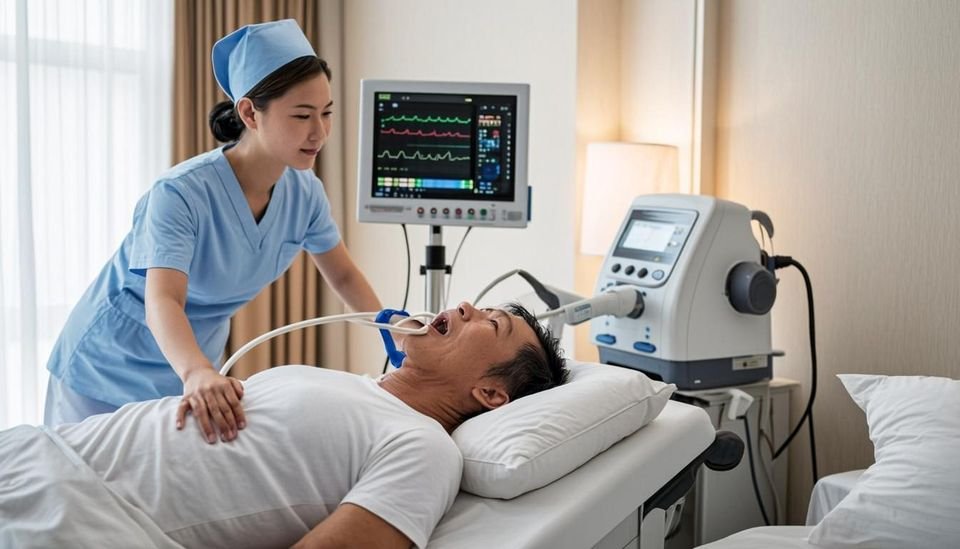
Having a family member on a ventilator at home is one of the most challenging situations any family can face. It requires a significant commitment of resources, time, and emotional energy, but it can also be deeply rewarding when it means your loved one can be surrounded by family in a familiar, loving environment rather than in a hospital bed. In Lahore, an increasing number of families are choosing home ventilator care for patients who are medically stable but require long-term respiratory support.
This guide covers everything you need to know if you are considering or currently managing ventilator care at home.
When Is Ventilator Care at Home Needed?
Ventilator care at home is typically considered for patients who have been on a ventilator in the hospital for an extended period and have been medically stabilised, but who cannot yet breathe independently. Common conditions that may lead to long-term ventilator dependence include severe spinal cord injuries resulting in quadriplegia, advanced neuromuscular diseases such as ALS or muscular dystrophy, severe stroke with brainstem involvement, chronic obstructive pulmonary disease (COPD) in end stages, post-surgical complications requiring prolonged respiratory support, and certain progressive neurological conditions.
The decision to transition from hospital to home is always made by the patient's medical team, typically involving the pulmonologist, intensivist, neurologist, and physiatrist. The patient must be clinically stable with no anticipated need for emergency interventions in the near term.
Essential Equipment for Home Ventilator Care
Setting up a ventilator-dependent patient at home requires specific equipment, all of which a professional home healthcare provider can supply and install. Here is a comprehensive list of what is needed:
- Ventilator machine: A portable or home-use ventilator appropriate for the patient's specific respiratory needs. Home ventilators are simpler than ICU ventilators but still provide advanced modes of ventilation.
- Backup oxygen supply: Oxygen cylinders or an oxygen concentrator to supplement the ventilator as prescribed by the pulmonologist.
- Suction machine: A portable suction unit for clearing airway secretions, which is critical for preventing airway blockages.
- Cardiac monitor: A bedside monitor displaying heart rate, oxygen saturation (SpO2), blood pressure, and respiratory rate.
- Pulse oximeter: A continuous pulse oximeter for ongoing oxygen saturation monitoring.
- Ambu bag (manual resuscitator): A hand-operated bag for emergency manual ventilation if the ventilator fails.
- Tracheostomy care supplies: Including spare tracheostomy tubes, ties, cleaning supplies, and humidification equipment.
- IV stand and infusion pump: If the patient requires continuous IV medications or nutrition.
- Specialised patient bed: An electric hospital bed with adjustable positions, side rails, and an anti-bedsore mattress.
- Emergency kit: Including extra tracheostomy tubes, suction catheters, emergency medications, and a detailed emergency protocol document.
Nurse Qualifications: What to Demand
The most critical component of home ventilator care is the nursing staff. A ventilator-dependent patient requires a nurse with specific training and experience. At a minimum, the nurse managing a home ventilator should have:
- A valid Pakistan Nursing Council (PNC) Registered Nurse (RN) license
- A minimum of 2-3 years of ICU or critical care experience
- Specific training in ventilator management, including understanding ventilator modes, alarm troubleshooting, and emergency ventilator disconnection procedures
- Tracheostomy care and suctioning expertise
- Basic Life Support (BLS) and ideally Advanced Cardiovascular Life Support (ACLS) certification
- Experience with the specific type of ventilator being used
For 24-hour ventilator care, you will typically need two nurses working 12-hour shifts, or three nurses working 8-hour shifts. It is essential to have a replacement plan in case a nurse falls ill or has an emergency. At Hum Home Care, we maintain a pool of ICU-trained nurses and guarantee replacement within hours if the assigned nurse is unavailable.
Emergency Protocols: Being Prepared for the Worst
Despite the best care, emergencies can happen. Every home ventilator setup must have a clearly documented emergency protocol that all nurses and family members understand. Key emergency scenarios and the required responses include:
Ventilator Alarm or Failure
If the ventilator alarms or stops functioning, the nurse should immediately disconnect the patient from the ventilator, begin manual ventilation with the Ambu bag, check for obvious issues such as a disconnection or power failure, switch to the backup ventilator or backup oxygen supply, and call the supervising doctor. If the patient's condition does not stabilise, arrange immediate transfer to the nearest hospital with ICU facilities.
Tracheostomy Displacement or Blockage
If the tracheostomy tube becomes dislodged or blocked, the nurse should attempt to reinsert the tube or insert the spare tube, suction the airway, provide oxygen via the face if tube reinsertion fails, and call for emergency assistance. The family should know the location of the nearest hospital with ENT and ICU services.
Cardiac or Respiratory Arrest
The nurse should begin CPR immediately, call for an ambulance and the supervising doctor, and follow the advanced cardiac life support protocol. Having the nearest hospital emergency number and route pre-planned is critical.
Power Supply: A Practical Challenge in Lahore
One of the most practical concerns for home ventilator care in Lahore is reliable electricity. Loadshedding and power fluctuations can be life-threatening for a ventilator-dependent patient. Every home ventilator setup must include a UPS system capable of running the ventilator, cardiac monitor, and oxygen concentrator for at least 2-4 hours, a generator as a secondary backup, and a clear protocol for what to do if power cannot be restored. The ventilator itself typically has an internal battery lasting 30-60 minutes, but this should never be relied upon as the primary backup.
Families in areas with more reliable power supply, or those with robust generator systems, will find home ventilator management more straightforward. However, even with occasional power issues, proper backup systems make home ventilator care entirely feasible in Lahore.
Quality of Life for Ventilator-Dependent Patients
Being ventilator-dependent at home does not mean the patient cannot have a meaningful quality of life. Many ventilator-dependent patients can communicate, watch television, listen to music, use computers or tablets, and interact with family members. Some patients with tracheostomy tubes can even speak using a speaking valve. Paediatric patients can attend school with portable ventilators, and adult patients can participate in family gatherings and social activities.
Regular physiotherapy helps prevent muscle contractures, maintains joint range of motion, and can contribute to weaning efforts if the patient's respiratory function improves. Occupational therapy can help the patient maximise their functional abilities and independence. Psychological support for both the patient and family is equally important and often overlooked.
Get Expert Ventilator Care Support at Home
Managing a ventilator at home is a team effort that requires experienced professionals, reliable equipment, and a supportive family environment. At Hum Home Care, we provide complete home ventilator care packages including ICU-trained nurses 24/7, all necessary equipment with maintenance and backup, doctor supervision with regular home visits and 24/7 teleconsultation, physiotherapy and occupational therapy, and emergency response protocols with pre-planned hospital transfer routes. WhatsApp us at 03250600666 or request a ventilator care assessment to discuss your family's needs with our clinical team.