What Is COPD?
Chronic Obstructive Pulmonary Disease (COPD) is a progressive lung disease characterised by persistent airflow limitation that is not fully reversible. The term COPD encompasses two primary conditions: emphysema, which involves the destruction of the alveoli (the tiny air sacs in the lungs where gas exchange occurs), and chronic bronchitis, which involves long-term inflammation of the bronchial tubes with excessive mucus production. In most patients with COPD, both conditions coexist to varying degrees. The airflow limitation in COPD is caused by a combination of small airway disease (obstructive bronchiolitis) and parenchymal destruction (emphysema), the relative contributions of which vary from person to person.
COPD is a major global health problem. The World Health Organization estimates that COPD is the third leading cause of death worldwide, responsible for approximately 3.2 million deaths annually. In Pakistan, COPD prevalence is substantial, with studies suggesting that 5 to 10 percent of the adult population is affected. However, the true prevalence may be higher because COPD is significantly underdiagnosed, particularly in its early stages. Many patients in Lahore and across Pakistan do not seek medical attention until the disease has progressed to moderate or severe stages, by which time significant lung damage has already occurred.
A factor particularly relevant to Pakistan and Lahore is the role of biomass fuel exposure. While cigarette smoking remains the most significant risk factor for COPD globally, in Pakistan, exposure to smoke from burning biomass fuels such as wood, animal dung, and crop residues for cooking and heating is a major contributor to COPD, particularly among women in rural and semi-urban areas. Indoor air pollution from biomass fuels is estimated to account for a substantial proportion of COPD cases in Pakistani women, many of whom have never smoked. In Lahore, air pollution from vehicular emissions, industrial activity, and crop burning in surrounding areas further compounds respiratory health risks.
Understanding the GOLD Classification
The Global Initiative for Chronic Obstructive Lung Disease (GOLD) provides a standardised framework for assessing COPD severity, guiding treatment decisions, and predicting outcomes. The GOLD classification is based primarily on the results of spirometry, a pulmonary function test that measures how much air a person can exhale and how quickly. The key spirometry measurement is the forced expiratory volume in one second (FEV1), expressed as a percentage of the predicted normal value for the patient's age, sex, and height.
GOLD Stage 1: Mild COPD
In this stage, FEV1 is 80 percent or more of the predicted normal value. Patients may have mild symptoms such as a chronic cough and slight shortness of breath with strenuous activity. Many patients at this stage are unaware that they have COPD, and the condition often goes undiagnosed. However, early identification at this stage is important because treatment and lifestyle changes, particularly smoking cessation, can significantly slow disease progression.
GOLD Stage 2: Moderate COPD
FEV1 is between 50 and 79 percent of predicted. This is the stage at which most patients first seek medical attention, as symptoms become more noticeable and bothersome. Shortness of breath becomes apparent during routine activities such as walking up stairs or carrying groceries. Chronic cough and sputum production are common. This is the stage where formal pulmonary rehabilitation programmes typically begin, and where regular medical follow-up through doctor home visits in Lahore becomes essential.
GOLD Stage 3: Severe COPD
FEV1 is between 30 and 49 percent of predicted. Symptoms are significantly more severe. Shortness of breath occurs with minimal exertion, and patients experience a substantial reduction in exercise tolerance and quality of life. Exacerbations (acute worsening of symptoms) become more frequent and can require hospitalisation. Fatigue, weight loss, and muscle wasting may develop. Patients at this stage often require multiple medications and may benefit from long-term oxygen therapy.
GOLD Stage 4: Very Severe COPD
FEV1 is less than 30 percent of predicted, or less than 50 percent with respiratory failure. This is the most advanced stage, characterised by severe airflow limitation, significant disability, and frequent exacerbations. Quality of life is markedly reduced. Patients may require continuous or near-continuous oxygen therapy and may develop complications such as cor pulmonale (right-sided heart failure due to lung disease). Intensive home healthcare support, including nursing care and regular physician oversight, is critical for patients at this stage.
Common Causes and Risk Factors
COPD develops as a result of long-term exposure to irritating gases or particulate matter that damage the lungs and airways. The most significant risk factors include:
- Cigarette smoking: This is the most important risk factor for COPD worldwide, responsible for approximately 80 to 90 percent of COPD cases. The risk increases with the number of cigarettes smoked per day and the duration of smoking. Not all smokers develop COPD, but smoking significantly increases the probability, severity, and rate of progression of the disease.
- Biomass fuel exposure: In Pakistan, the use of biomass fuels for cooking and heating in poorly ventilated homes is a major cause of COPD, particularly among women who have never smoked. Prolonged exposure to wood smoke, animal dung smoke, and crop residue smoke causes inflammatory changes in the airways that are similar to those caused by cigarette smoke.
- Occupational exposure: Workers in industries involving dust, chemicals, and fumes, such as construction, textiles, agriculture, and manufacturing, face increased COPD risk. Lahore's industrial areas and construction sites contribute to occupational respiratory exposures.
- Air pollution: Lahore consistently ranks among the cities with the highest air pollution levels in the world, particularly during winter months. Exposure to elevated levels of particulate matter (PM2.5 and PM10), nitrogen dioxide, and other pollutants contributes to the development and worsening of COPD.
- Genetic factors: Alpha-1 antitrypsin deficiency is a rare genetic disorder that can cause COPD in non-smokers and at a younger age. This condition is responsible for a small percentage of COPD cases but is important to consider in patients who develop COPD without typical risk factors.
- Respiratory infections: Severe respiratory infections in childhood may impair lung growth and increase susceptibility to COPD in adulthood. Recurrent respiratory infections in adulthood can also accelerate COPD progression.
Signs and Symptoms
COPD symptoms typically develop gradually and worsen over time. Many patients adapt to their declining lung function by reducing their activity level, which can delay recognition of the disease. The primary symptoms include:
- Chronic cough: Often the first symptom to develop. It may be present for years before other symptoms appear and is frequently dismissed as a smoker's cough or a normal consequence of ageing. The cough is usually productive, meaning it produces sputum (mucus), which may be clear, white, yellow, or greenish.
- Shortness of breath (dyspnoea): Initially noticed during physical exertion such as climbing stairs, walking briskly, or carrying heavy objects. As the disease progresses, breathlessness occurs with less and less activity and eventually may be present even at rest. Dyspnoea is the symptom that most significantly affects quality of life in COPD patients.
- Wheezing: A whistling or squeaking sound during breathing, caused by narrowed airways. Wheezing may be more pronounced during exhalation and during exacerbations.
- Chest tightness: A sensation of pressure or constriction in the chest, often accompanying breathlessness.
- Frequent respiratory infections: COPD patients are more susceptible to colds, flu, pneumonia, and other respiratory infections, which can trigger exacerbations and accelerate lung function decline.
- Fatigue and reduced exercise tolerance: As the lungs become less efficient at exchanging oxygen and carbon dioxide, patients experience increasing tiredness and are unable to perform activities they previously managed easily.
- Unintended weight loss: In advanced COPD, the increased work of breathing burns significant calories, and patients may lose weight and muscle mass, which further worsens their condition.
- Chronic sputum production: Regular coughing up of mucus, which may increase in volume during exacerbations.
How COPD Is Diagnosed
The diagnosis of COPD requires a combination of clinical assessment and objective lung function testing. The most important diagnostic test is spirometry, which measures the volume and speed of air that can be inhaled and exhaled. A post-bronchodilator FEV1 to FVC (forced vital capacity) ratio of less than 0.70 confirms the presence of airflow limitation that is not fully reversible, which is the hallmark of COPD. Spirometry is essential for distinguishing COPD from asthma, in which airflow limitation is largely reversible.
Additional diagnostic tests may include chest X-rays, which can show hyperinflation of the lungs and rule out other conditions such as pneumonia or lung cancer. A ECG is performed to assess for cardiac complications such as cor pulmonale and arrhythmias, which are common in advanced COPD. Blood tests may include arterial blood gas analysis to assess oxygen and carbon dioxide levels, complete blood count to check for polycythaemia (elevated red blood cell count caused by chronic hypoxia), and tests for alpha-1 antitrypsin deficiency in selected patients. Home laboratory testing in Lahore makes it convenient to monitor these parameters regularly.
A thorough medical history focusing on smoking exposure, occupational exposures, family history, and symptom pattern is also essential for accurate diagnosis. Doctor home visits provide an opportunity for comprehensive clinical assessment in a comfortable setting, which is particularly valuable for patients who experience significant breathlessness when travelling.
Treatment Options
Medications
Pharmacological treatment for COPD focuses on relieving symptoms, reducing the frequency and severity of exacerbations, and improving exercise tolerance and quality of life. Bronchodilators are the cornerstone of COPD medication. Short-acting bronchodilators (SABAs and SAMAs) are used as rescue medications for rapid symptom relief. Long-acting bronchodilators (LABAs and LAMAs) are used as maintenance therapy to keep airways open over extended periods. For patients with frequent exacerbations, inhaled corticosteroids (ICS) may be added to long-acting bronchodilators to reduce airway inflammation.
For patients with very severe COPD and chronic respiratory failure, roflumilast (a phosphodiesterase-4 inhibitor) may be added to reduce exacerbation risk. Antibiotics are used during exacerbations when a bacterial infection is suspected. Theophylline, an oral bronchodilator, may be used as additional therapy in patients whose symptoms are not adequately controlled with inhaled medications alone. Home medicine delivery in Lahore ensures patients have reliable access to their prescribed COPD medications, including inhalers, nebuliser solutions, and oral medications.
Oxygen Therapy
Long-term oxygen therapy (LTOT) is one of the most important treatments for patients with severe COPD and chronic hypoxaemia. It is indicated for patients whose arterial oxygen pressure (PaO2) is consistently at or below 55 mmHg, or whose oxygen saturation (SpO2) is at or below 88 percent, during rest while breathing room air. LTOT is typically prescribed for at least 15 hours per day, including during sleep. When used consistently as prescribed, LTOT has been shown to improve survival, reduce pulmonary hypertension, alleviate symptoms of breathlessness, improve exercise capacity, and enhance cognitive function.
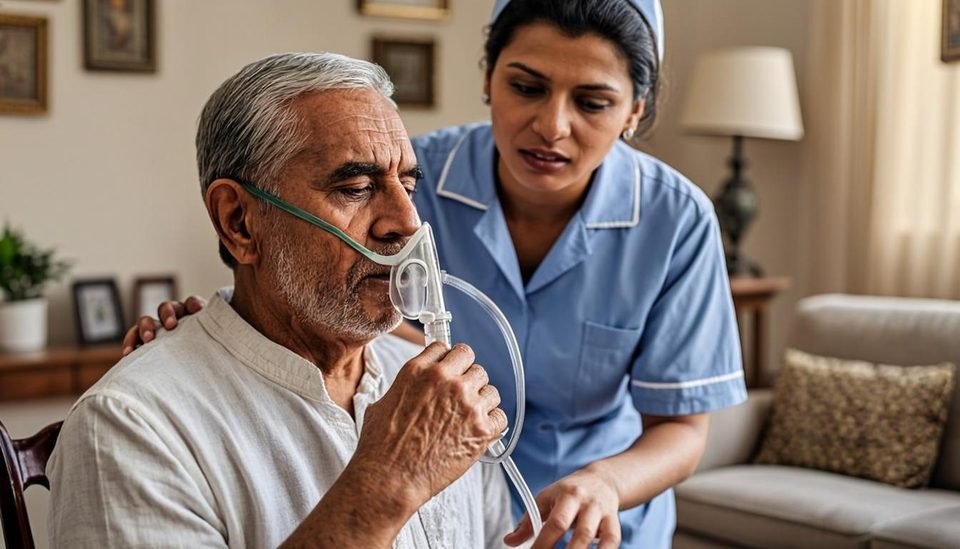
Home oxygen therapy requires proper equipment setup, patient and family education on safe oxygen use, and regular monitoring to assess the adequacy of oxygenation. Home nursing services can provide essential support in managing home oxygen therapy, including monitoring oxygen saturation levels, ensuring equipment is functioning correctly, educating the family on fire safety precautions (oxygen supports combustion), and coordinating oxygen supply refills.
Pulmonary Rehabilitation
Pulmonary rehabilitation is a comprehensive, evidence-based programme of exercise training, education, and behavioural change designed to improve the physical and psychological condition of people with chronic respiratory disease. It is one of the most effective interventions for COPD, producing significant improvements in exercise capacity, breathlessness, health-related quality of life, and reduction in hospital admissions. The core components of pulmonary rehabilitation include supervised exercise training (aerobic exercise such as walking and cycling, plus strength training), breathing exercise training, education on COPD self-management, nutritional counselling, and psychological support.
While traditional pulmonary rehabilitation programmes are hospital-based, home-based pulmonary rehabilitation has been shown to be equally effective for many patients. A home physiotherapist can design and supervise a pulmonary rehabilitation programme tailored to the patient's specific needs and functional level, delivered in the comfort and convenience of the patient's home in Lahore.
Breathing Exercises for COPD
Specific breathing techniques help COPD patients breathe more efficiently, reduce breathlessness, and improve airway clearance. These techniques are a key component of pulmonary rehabilitation and daily self-management:
- Pursed-lip breathing: The patient inhales slowly through the nose for a count of two, then exhales slowly through pursed (narrowed) lips for a count of four. This technique creates back-pressure in the airways that helps keep them open longer during exhalation, allowing more air to be expelled from the lungs and reducing the feeling of air trapping. It also slows the breathing rate, which reduces the work of breathing and promotes relaxation.
- Diaphragmatic breathing: The patient places one hand on the chest and the other on the abdomen. During inhalation, the patient focuses on expanding the abdomen rather than the chest, allowing the diaphragm to move downward and draw air deeper into the lungs. During exhalation, the abdomen is pulled inward. This technique maximises the efficiency of each breath and reduces the energy cost of breathing.
- Controlled coughing: Patients are taught to cough in a controlled manner that effectively clears mucus without causing airway collapse. This involves sitting upright, taking a slow deep breath, holding it for two to three seconds, and then coughing in two or three short, sharp bursts while hugging a pillow against the abdomen for support.
- Positioning for breath relief: Leaning forward while sitting (with arms resting on a table or knees), or adopting a tripod position (leaning forward with arms supported on a walking frame or chair), can help the diaphragm work more effectively and reduce the sensation of breathlessness during episodes of increased dyspnoea.
How Home Healthcare Supports COPD Management in Lahore
COPD is a chronic condition that requires continuous, long-term management. For patients in Lahore, home healthcare services provide comprehensive support that enables effective disease management without the need for frequent hospital visits, which can be physically taxing for patients with significant breathlessness and limited exercise tolerance.
Doctor home visits allow COPD patients to receive regular medical assessments from the comfort of their home. The visiting physician evaluates respiratory status, monitors lung function, adjusts medications, manages exacerbations, and coordinates the overall care plan. For patients with advanced COPD who find even short journeys distressing, home doctor visits ensure that medical oversight is never neglected. The physician can also assess the home environment for factors that may worsen respiratory symptoms, such as dust, mould, and inadequate ventilation.
Home nursing care provides essential clinical support for COPD patients. Nurses monitor vital signs and oxygen saturation levels, administer nebulised medications and inhaler therapy, provide education on correct inhaler technique (poor technique is a common reason for inadequate symptom control), manage oxygen therapy equipment, perform sputum clearance techniques, monitor for signs of respiratory infection and exacerbation, and provide wound care and other nursing support as needed. For patients recovering from a COPD exacerbation at home, nursing care helps prevent readmission and supports safe recovery.
ECG monitoring at home is important for COPD patients because the disease can lead to cardiac complications including cor pulmonale (right heart failure), arrhythmias, and myocardial strain. Regular ECG monitoring helps detect these complications early. Portable X-ray services at home can assess lung status, evaluate for pneumonia or other complications during exacerbations, and monitor disease progression without requiring the patient to travel to a hospital.
Physiotherapy at home is invaluable for COPD patients. A physiotherapist delivers supervised exercise training as part of a home-based pulmonary rehabilitation programme, teaches and supervises breathing exercises, provides chest physiotherapy to assist with mucus clearance, and educates patients on energy conservation techniques and pacing strategies for daily activities.
Home laboratory testing allows regular monitoring of key parameters including blood counts, inflammatory markers, and blood gas levels. Medicine delivery at home ensures that patients never run out of essential COPD medications and oxygen supplies.
Managing COPD Exacerbations
A COPD exacerbation is an acute worsening of respiratory symptoms that goes beyond normal day-to-day variations and requires a change in treatment. Exacerbations are commonly triggered by respiratory infections (viral or bacterial), air pollution exposure, allergen exposure, or discontinuation of medications. Signs of an exacerbation include increased breathlessness, increased cough and sputum production, change in sputum colour or consistency, increased wheezing, chest tightness, fever, and general malaise.
Early recognition and prompt treatment of exacerbations is important because they accelerate lung function decline, reduce quality of life, increase the risk of hospitalisation, and in severe cases can be life-threatening. Patients and families should have an action plan in place that outlines what to do when symptoms worsen. This plan typically includes increasing the use of rescue bronchodilators, starting a short course of oral corticosteroids and antibiotics if prescribed, monitoring oxygen saturation levels, and contacting the healthcare provider promptly if symptoms do not improve within 48 hours.
Home nursing services can help patients manage exacerbations at home when appropriate, administering nebulised medications, monitoring vital signs and oxygen levels, ensuring medication adherence, and communicating with the treating physician about the patient's status. This can often prevent the need for hospital admission while ensuring the patient receives appropriate medical care.
When to Seek Emergency Help
While many COPD exacerbations can be managed at home with medical support, certain situations require immediate emergency attention. Patients and families in Lahore should seek urgent help if they observe:
- Severe breathlessness at rest that does not improve with rescue medications
- Oxygen saturation falling below 90 percent despite oxygen therapy
- Blue or grey discolouration of the lips or fingernails (cyanosis)
- Confusion, drowsiness, or difficulty staying awake, which may indicate carbon dioxide retention
- Chest pain or pressure
- Rapid or irregular heartbeat
- Inability to speak in full sentences due to breathlessness
Prevention Tips
The single most important measure for preventing COPD and slowing its progression is smoking cessation. Quitting smoking at any stage of the disease slows the rate of lung function decline and improves survival. Additional prevention strategies include avoiding exposure to secondhand smoke, reducing exposure to biomass fuel smoke by using cleaner cooking technologies and improving ventilation, minimising exposure to outdoor air pollution (using masks on high-pollution days in Lahore, using air purifiers indoors), receiving annual influenza vaccination and pneumococcal vaccination, practising regular hand hygiene to reduce infection risk, and maintaining overall physical fitness through regular exercise as tolerated. Regular medical check-ups at home help monitor lung function and detect changes early.
Living with COPD: Daily Management
Living well with COPD requires active self-management and professional support. Patients in Lahore should take all prescribed medications consistently and use correct inhaler technique. Perform breathing exercises daily, even when feeling well, to maintain lung efficiency. Engage in regular physical activity within the limits of their exercise tolerance, gradually building endurance under physiotherapist guidance. Monitor oxygen saturation levels at home if prescribed. Avoid known triggers such as cigarette smoke, dust, strong fumes, and cold air. Eat a nutritious, well-balanced diet and maintain a healthy weight, as both malnutrition and obesity can worsen COPD symptoms. Stay well hydrated to help thin mucus secretions. Ensure the home environment is clean, well-ventilated, and free from respiratory irritants. Seek emotional and psychological support, as living with a chronic respiratory condition can be anxiety-provoking and isolating.
With comprehensive home healthcare from Hum Home Care, COPD patients in Lahore can manage their condition effectively, reduce exacerbations, maintain their independence, and achieve the best possible quality of life despite their lung condition.