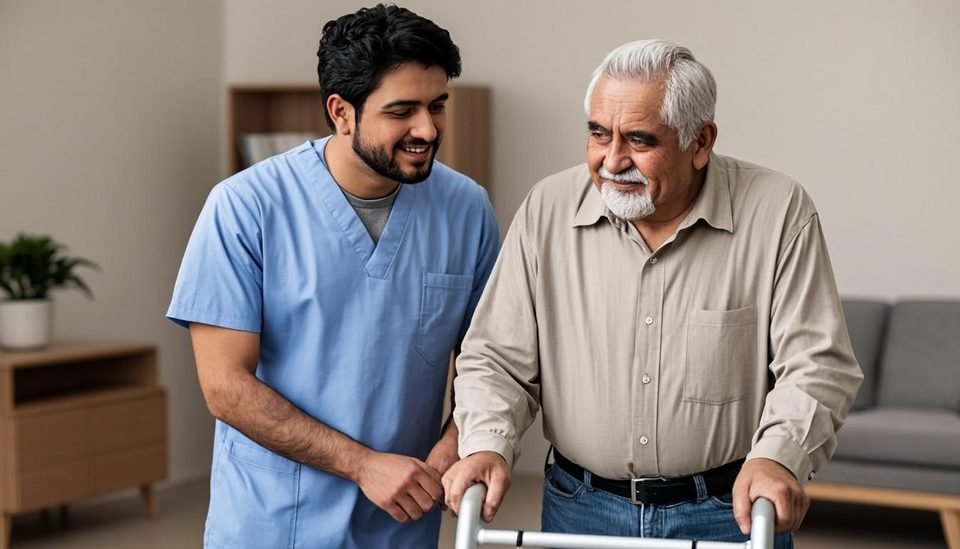
What Is Parkinson's Disease?
Parkinson's disease is a chronic, progressive neurodegenerative disorder that primarily affects the motor system. It occurs when nerve cells (neurons) in the substantia nigra, a region of the brain responsible for producing dopamine, gradually deteriorate and die. Dopamine is a critical neurotransmitter that facilitates smooth, coordinated muscle movements. When dopamine levels drop significantly, the hallmark motor symptoms of Parkinson's disease begin to appear.
Parkinson's disease is the second most common neurodegenerative condition after Alzheimer's disease. In Pakistan, an increasing number of elderly patients are being diagnosed, and families in Lahore often face challenges in accessing consistent, specialised care. Hum Home Care addresses this gap by bringing trained healthcare professionals directly to the patient's home, ensuring continuity of care in a familiar and comfortable environment.
While Parkinson's disease currently has no cure, a combination of medication, physiotherapy, lifestyle modifications, and professional caregiving can significantly improve quality of life and slow functional decline.
Causes and Risk Factors
The exact cause of Parkinson's disease remains unknown in most cases, which are classified as idiopathic. However, researchers have identified several factors that contribute to its development:
- Age: The single greatest risk factor. Most people develop symptoms after age 60, though approximately 5 to 10 percent of cases occur before age 50 (young-onset Parkinson's).
- Genetics: Mutations in genes such as LRRK2, SNCA, PARK7, PINK1, and PRKN have been linked to familial forms of the disease. Having a close relative with Parkinson's increases risk modestly.
- Environmental exposures: Prolonged exposure to pesticides, herbicides, industrial chemicals, and heavy metals has been associated with a higher incidence of Parkinson's disease.
- Head trauma: Previous traumatic brain injuries, particularly those resulting in loss of consciousness, may increase susceptibility.
- Gender: Men are approximately 1.5 times more likely to develop Parkinson's disease than women.
In Lahore's urban environment, exposure to air pollution and industrial chemicals may represent additional environmental risk factors that warrant further study and awareness.
Symptoms of Parkinson's Disease
Parkinson's disease symptoms are broadly categorised into motor symptoms and non-motor symptoms. Both categories significantly impact daily living and require comprehensive management.
Primary Motor Symptoms
The four cardinal motor symptoms form the basis of clinical diagnosis:
- Tremor at rest: A rhythmic shaking, typically beginning in one hand (often described as a pill-rolling motion). It is most noticeable when the affected limb is relaxed and diminishes during voluntary movement.
- Bradykinesia: Generalised slowness of movement. This manifests as difficulty initiating tasks, reduced arm swing while walking, and a gradual reduction in the amplitude of repetitive movements such as finger tapping.
- Muscle rigidity: Stiffness and resistance to passive movement in the limbs and neck. This can cause pain and limit the range of motion.
- Postural instability: Impaired balance and coordination, leading to a stooped posture, shuffling gait, and increased risk of falls. This symptom typically emerges in the later stages.
Non-Motor Symptoms
Non-motor symptoms are often overlooked but can be equally debilitating. They include:
- Loss of sense of smell (anosmia), often one of the earliest indicators
- Constipation and digestive difficulties
- Sleep disturbances, including REM sleep behaviour disorder
- Depression and anxiety
- Cognitive changes, including difficulties with memory and executive function
- Reduced facial expression (hypomimia), sometimes called a masked face
- Soft or monotone voice (hypophonia)
- Micrographia (progressively smaller handwriting)
- Urinary urgency and frequency
Diagnosis of Parkinson's Disease
There is no single definitive test for Parkinson's disease. Diagnosis is primarily clinical, based on a thorough neurological examination and the presence of the cardinal motor symptoms. A neurologist will typically assess the patient's medical history, conduct a physical examination focusing on movement and coordination, and may order brain imaging (MRI or CT scan) to rule out other conditions such as stroke, brain tumours, or normal pressure hydrocephalus.
In Lahore, Hum Home Care can facilitate doctor consultations at home, arrange portable diagnostic imaging, and coordinate laboratory tests to support the diagnostic process. Early and accurate diagnosis is crucial for initiating appropriate treatment and planning long-term care.
Treatment Options
Treatment for Parkinson's disease is multimodal and must be tailored to each patient's symptoms, stage of disease, and individual circumstances.
Medications
Pharmacological treatment centres on replenishing or mimicking dopamine in the brain:
- Levodopa/Carbidopa (Sinemet): The gold-standard medication. Levodopa is converted to dopamine in the brain, while carbidopa prevents peripheral conversion and reduces side effects such as nausea.
- Dopamine agonists (e.g., Pramipexole, Ropinirole): These mimic dopamine's effects and are often used in early stages or alongside levodopa.
- MAO-B inhibitors (e.g., Rasagiline, Selegiline): These block the enzyme that breaks down dopamine, extending its availability.
- COMT inhibitors (e.g., Entacapone): Used alongside levodopa to prolong its effect and reduce motor fluctuations.
- Anticholinergics: May be prescribed to control tremor, particularly in younger patients.
Medication management requires careful timing and dosage adjustments, especially as the disease progresses. Home nursing services can ensure medications are administered correctly and on schedule.
Surgical Interventions
Deep Brain Stimulation (DBS) is a surgical option for patients with advanced Parkinson's disease who experience significant motor fluctuations and dyskinesias despite optimal medication therapy. Electrodes are implanted in specific brain regions and connected to a pulse generator that delivers electrical impulses to modulate abnormal brain activity. DBS is available at major hospitals in Lahore and can significantly improve quality of life for carefully selected candidates.
Home Care for Parkinson's Disease Patients
Home care plays a central role in the management of Parkinson's disease, particularly as the condition progresses and daily activities become more challenging. In Lahore, families increasingly turn to professional home healthcare services to provide the level of support their loved ones need.
Fall Prevention and Home Safety
Falls are one of the most serious complications of Parkinson's disease. Implementing comprehensive home safety measures is essential:
- Remove loose rugs, cords, and clutter from walkways
- Install grab bars in bathrooms and along hallways
- Ensure all rooms have adequate, non-glare lighting
- Place non-slip mats in the bathroom and kitchen
- Raise toilet seats and install shower chairs
- Keep frequently used items within easy reach to avoid bending and stretching
- Consider bed rails or adjustable-height beds
- Use contrasting colours for steps, doorways, and furniture edges to improve visual perception
Professional caregivers trained by Hum Home Care conduct home safety assessments and implement personalised modifications to reduce fall risk.
Physiotherapy and Exercise
Regular physiotherapy is one of the most effective non-pharmacological interventions for Parkinson's disease. A structured exercise programme should include:
- Gait training: Techniques to improve walking pattern, stride length, and turning ability
- Balance exercises: Activities that challenge and improve postural stability
- Stretching and flexibility: To counteract muscle rigidity and maintain range of motion
- Strength training: To preserve muscle mass and functional capacity
- Tai Chi and dance-based movement: Evidence supports these as particularly beneficial for balance and motor control in Parkinson's patients
Hum Home Care offers physiotherapy services delivered at home by experienced therapists who specialise in neurological rehabilitation. Consistent, supervised exercise sessions can significantly slow functional decline.
Caregiver Support and Training
Caring for a person with Parkinson's disease at home can be physically and emotionally demanding. Family caregivers often experience stress, fatigue, and burnout. Professional caregiver services provide essential respite and ensure that the patient receives skilled, consistent care. Trained caregivers assist with activities of daily living, medication administration, mobility support, and companionship. They also monitor for changes in symptoms and communicate with the supervising physician.
Nutrition and Dietary Management
Proper nutrition is important for overall health and can help manage specific Parkinson's symptoms. A high-fibre diet helps counteract constipation, which is common in Parkinson's patients. Adequate protein intake supports muscle strength, though some patients may need to time protein consumption around levodopa doses, as dietary protein can interfere with medication absorption. Staying well-hydrated is also essential. A home nurse or caregiver can help plan and prepare nutritious meals tailored to the patient's needs.
Emergency Signs Requiring Immediate Attention
Certain symptoms and situations require urgent medical evaluation. Seek immediate help if the patient experiences:
- Sudden, severe worsening of motor symptoms
- A significant fall, particularly involving head injury or loss of consciousness
- Difficulty breathing or swallowing, which may indicate aspiration risk
- Sudden onset of confusion, hallucinations, or severe agitation
- High fever, which may indicate neuroleptic malignant syndrome (a rare but life-threatening reaction to certain medications)
- Inability to take oral medications, risking abrupt dopamine withdrawal
In Lahore, call 03250600666 for urgent home care assistance or message us on WhatsApp for immediate support.
Speech and Communication Difficulties
As Parkinson's disease progresses, many patients develop changes in speech and communication. Hypophonia (reduced voice volume), dysarthria (slurred or slow speech), and a monotone quality are common. These changes can significantly affect social interaction and emotional wellbeing. A speech-language pathologist can provide targeted therapy, but in the home setting, caregivers can help by encouraging the patient to speak slowly and deliberately, face the listener directly, exaggerate mouth movements, and practise reading aloud. Hum Home Care's home nursing staff can guide families in communication strategies and coordinate referrals to speech-language professionals when needed.
Swallowing and Nutritional Challenges
Dysphagia (difficulty swallowing) affects many Parkinson's patients, particularly in the middle and later stages of the disease. This can lead to inadequate nutrition, dehydration, and the serious risk of aspiration pneumonia, which is a leading cause of death in advanced Parkinson's disease. Warning signs of dysphagia include coughing or choking during meals, a feeling of food sticking in the throat, frequent chest infections, unexplained weight loss, and prolonged meal times.
A home nurse can assess swallowing safety, recommend dietary modifications such as thickened liquids and pureed foods, ensure the patient sits upright during and after meals, and monitor for signs of aspiration. Small, frequent meals that are nutritionally dense are often easier to manage than three large meals. A doctor home visit can provide ongoing assessment and adjust the care plan as swallowing function changes.
Prevention and Daily Management
While Parkinson's disease cannot be entirely prevented, certain lifestyle measures may reduce risk and improve outcomes:
- Regular aerobic exercise has been shown to have neuroprotective effects
- A diet rich in antioxidants (fruits, vegetables, whole grains) may support brain health
- Avoiding exposure to pesticides, herbicides, and industrial toxins
- Protecting against head injuries during sports and physical activities
- Maintaining social engagement and cognitive stimulation
- Adhering strictly to prescribed medication schedules
- Keeping a symptom diary to track fluctuations and inform clinical decisions
Daily management should be structured and consistent. Establishing routines for medication, meals, exercise, and rest helps reduce variability in symptoms and improves overall wellbeing. Patients should keep a symptom diary that records medication timing, meals, activity levels, and symptom fluctuations. This information is invaluable for the supervising physician when making dosage adjustments. Sleep quality should be prioritised, as poor sleep significantly worsens motor and non-motor symptoms. A comfortable, cool sleeping environment, avoidance of caffeine in the evening, and a consistent bedtime routine all contribute to better rest.
Mental health is equally important. Depression and anxiety affect up to 50 percent of Parkinson's patients and should not be dismissed as an inevitable consequence of the disease. Professional counselling, social engagement, and participation in support groups can make a meaningful difference. Professional home care teams can help create and maintain these routines, providing both the patient and their family with stability, companionship, and peace of mind.