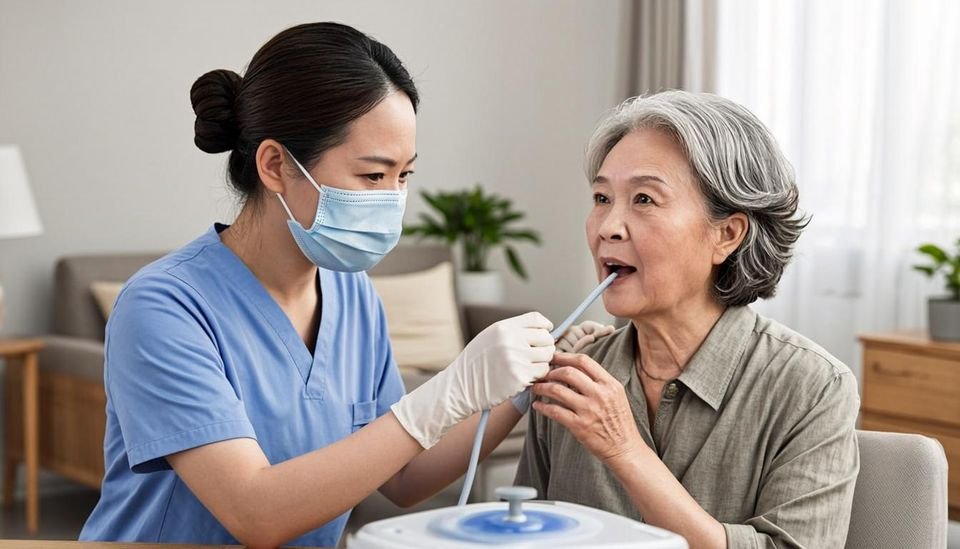
Why choose our tracheostomy care at home
Every aspect of this service is designed to match or exceed what you would receive in a hospital setting — delivered at your doorstep in Lahore.
Trained nurses for tracheostomy tube care
Suctioning and airway management
Stoma site care and infection prevention
Tube replacement assistance
Family education and training provided
Who needs tracheostomy care at home
From booking to care in 4 steps
Share tracheostomy details and medical history
Share tracheostomy details and medical history
Trained nurse assigned with relevant experience
Trained nurse assigned with relevant experience
Initial assessment and care plan created
Initial assessment and care plan created
Regular visits with family training
Regular visits with family training
What Lahore families say about us
"After my mother's tracheostomy, the home care nurses from Hum Home Care were exceptional. They kept the stoma clean, managed suctioning professionally, and even trained our family member on basic care. Their expertise gave us confidence."
"The tracheostomy care at home has been a blessing. The nurse is thorough, gentle, and very knowledgeable. She handles tube changes and suctioning with complete confidence. The family training sessions were incredibly valuable."
"We needed tracheostomy care for my father who is also on a ventilator. Hum Home Care provided a nurse experienced in both. The coordination and clinical quality have been outstanding for over 6 months now."
Frequently asked questions about tracheostomy care at home
Need Tracheostomy Care at Home in Lahore?
24/7 availability · PMDC-verified staff · 60-min dispatch
How often does a tracheostomy need care?
Tracheostomy care is typically needed multiple times per day. Suctioning may be required every 2-4 hours or as needed. Stoma site cleaning and dressing changes are usually done once or twice daily. Tube changes are done according to the doctor's schedule, typically every 1-4 weeks depending on the tube type.
Can family members be trained to help?
Absolutely. We actively encourage and provide family training for basic tracheostomy care including suctioning technique, stoma cleaning, and emergency response for accidental decannulation. Our nurses conduct structured training sessions and provide written instructions for reference. Family training significantly improves patient safety.
What are the signs of tracheostomy infection?
Signs to watch for include redness, swelling, or warmth around the stoma site, increased or foul-smelling discharge, fever, difficulty breathing through the tracheostomy tube, or bleeding from the stoma. Our nurses check for these signs at every visit and educate families on what to watch for between visits.
Do you provide the suction machine and supplies?
We can help arrange suction machines and basic tracheostomy care supplies. Our team will assess what equipment and consumables are needed and guide you on procurement. For ongoing care, we maintain a checklist of supplies and can coordinate regular resupply to ensure nothing runs out.