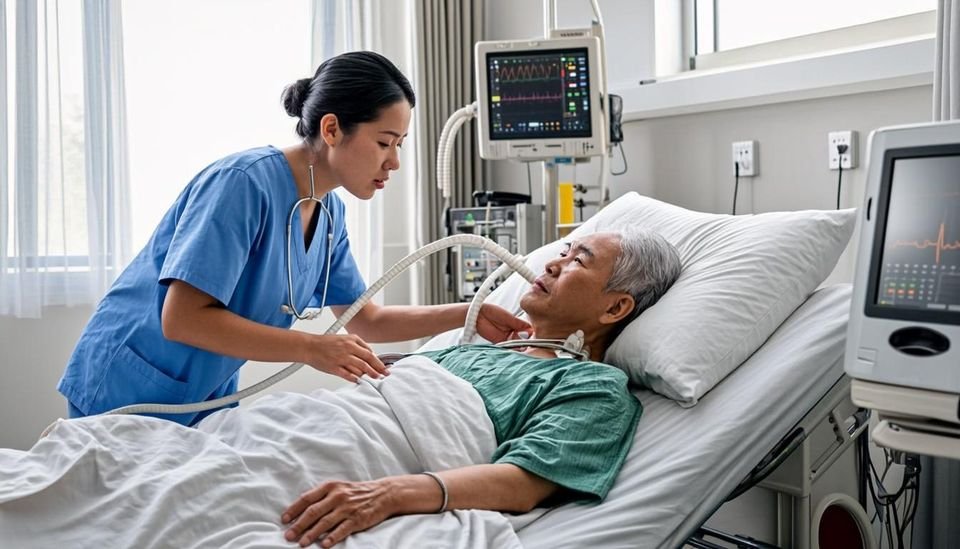
Why choose our ventilator care at home
Every aspect of this service is designed to match or exceed what you would receive in a hospital setting — delivered at your doorstep in Lahore.
Trained ventilator management nurses
24/7 respiratory monitoring
Emergency response protocol in place
Coordination with pulmonologists
Equipment setup and maintenance support
Who needs ventilator care at home
From booking to care in 4 steps
Share respiratory status and ventilator settings
Share respiratory status and ventilator settings
Critical care nurse with ventilator experience assigned
Critical care nurse with ventilator experience assigned
Equipment verification and setup
Equipment verification and setup
24/7 monitoring with emergency backup
24/7 monitoring with emergency backup
What Lahore families say about us
"Managing a ventilator at home for my father seemed impossible until Hum Home Care stepped in. The nurses are skilled, the backup systems are reliable, and the coordination with the pulmonologist is seamless."
"After a spinal cord injury, our son needed ventilator support at home. The Hum Home Care team set up everything professionally. The 24/7 nursing shifts give us the ability to sleep and function while knowing he is safe."
"The ventilator care team has been with us for 8 months now. Their consistency, skill, and compassion are remarkable. They handle emergencies calmly and the weekly doctor reviews keep the treatment plan on track."
Frequently asked questions about ventilator care at home
Can a ventilator really be managed safely at home?
Yes. With properly trained critical care nurses and the right emergency protocols, ventilator care at home is safe and increasingly common. We follow the same clinical protocols used in hospital ICUs, adapted for the home setting. Our nurses are trained in airway management, ventilator troubleshooting, and emergency response.
What ventilator equipment do you provide?
We coordinate the provision of mechanical ventilators, backup oxygen systems, suction machines, pulse oximeters, and emergency resuscitation equipment. The specific equipment depends on the patient's respiratory needs and is determined in consultation with the treating pulmonologist.
How do you handle power outages?
We require that the home has a UPS or backup power source for the ventilator. Our setup includes ensuring all critical equipment is connected to backup power. Our nursing staff is trained to switch to backup systems immediately during power failures and to perform manual bag-valve ventilation if needed.
What is the cost compared to hospital ICU?
Home ventilator care typically costs significantly less than a hospital ICU bed — often 40-60% less, depending on the level of monitoring and nursing hours required. Beyond cost savings, patients benefit from being in a familiar environment with family presence, which studies show can improve outcomes and quality of life.