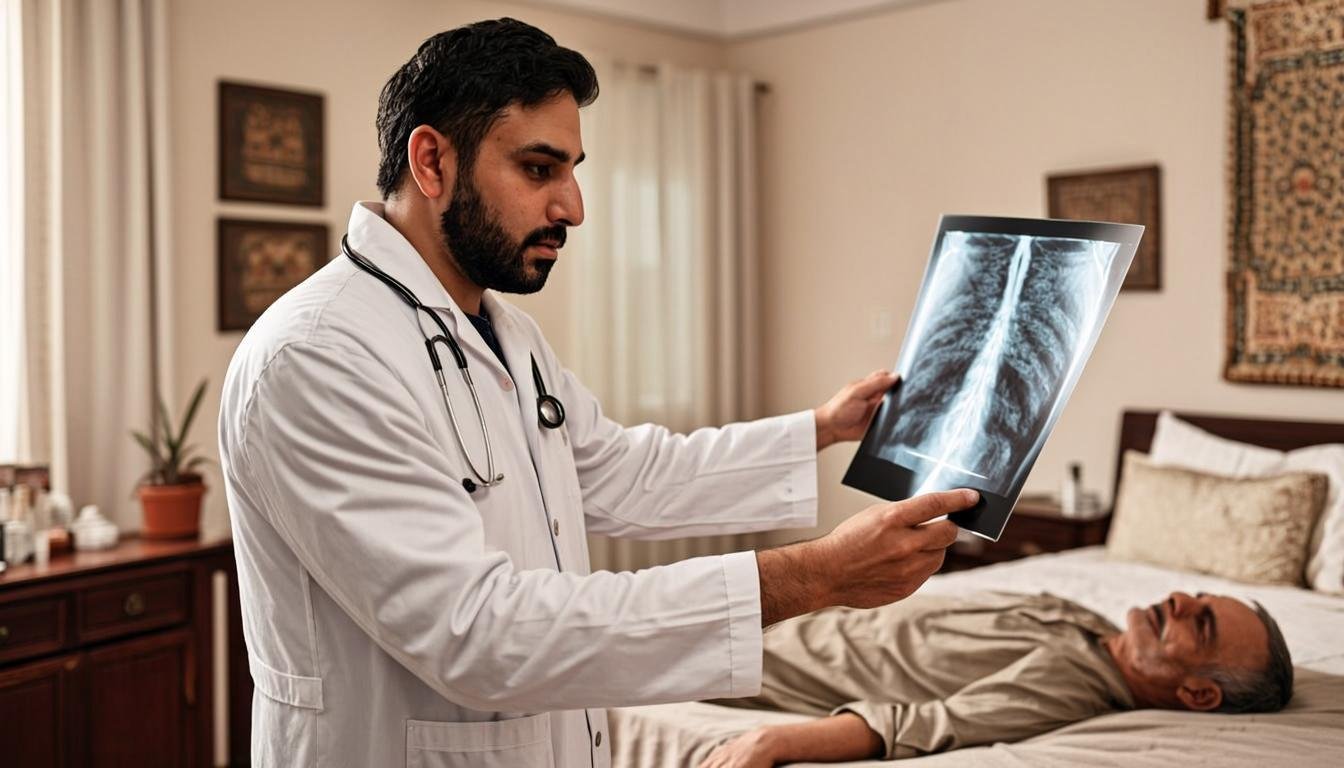
Getting an X-ray used to mean a trip to a hospital or diagnostic centre, navigating parking, waiting in queues, and then waiting again for the report. For elderly patients, post-surgery patients, those on ventilators, or anyone with limited mobility, this process can be physically exhausting and medically risky. Today, portable X-ray technology allows a qualified radiology technician to bring a fully digital X-ray machine to your home, capture high-quality images, and deliver a radiologist's report, often within hours.
In Lahore, home X-ray services are becoming increasingly popular as families recognise the convenience and safety benefits. Here is a detailed look at how the technology works, when it is useful, and what to expect.
The Technology Behind Portable X-Rays
Modern portable X-ray machines are a far cry from the bulky, low-quality units of the past. Today's portable digital radiography (DR) systems are compact, lightweight, and produce images that are comparable in quality to fixed hospital X-ray units. The technology works on the same principle as conventional X-rays: electromagnetic radiation passes through the body, and different tissues absorb different amounts, creating an image on a digital detector.
Key advantages of modern portable X-ray systems include:
- Digital imaging: No film is needed. Images are captured on a digital plate and transferred instantly to a computer, eliminating the risk of lost or damaged films.
- Lower radiation dose: Modern portable units use advanced technology to produce clear images with significantly lower radiation exposure compared to older machines.
- Instant preview: The technician can verify image quality immediately and retake if necessary, ensuring the radiologist receives a usable image the first time.
- Cloud-based reporting: Images can be securely transmitted to a radiologist for interpretation, with reports typically available within a few hours.
- Wireless capability: Many modern units are wireless, making setup and positioning quick and efficient.
What Conditions Can Home X-Rays Help Diagnose?
Portable X-rays at home are suitable for a wide range of diagnostic needs, particularly for patients who cannot easily travel. Common applications include:
- Chest X-rays: The most common home X-ray, used to diagnose pneumonia, bronchitis, congestive heart failure, pleural effusion (fluid in the lungs), tuberculosis, and COPD exacerbations. For elderly patients in Lahore who develop respiratory symptoms during smog season, a home chest X-ray enables rapid diagnosis without exposure to hospital infections.
- Fracture assessment: If a family member has fallen and sustained a suspected fracture, a portable X-ray can confirm or rule out the injury at home, allowing the family to plan appropriate treatment without moving the patient unnecessarily.
- Joint and bone assessment: X-rays of knees, hips, shoulders, and spine for patients with suspected osteoarthritis, joint dislocations, or bone infections.
- Post-surgical verification: After orthopaedic surgery, follow-up X-rays to check bone alignment, implant position, and healing progress can be done at home, which is especially valuable for patients who have recently had hip or knee replacements.
- Abdominal X-rays: To detect bowel obstruction, kidney stones, or other abdominal conditions when the patient is too unwell to travel.
- Tube and line verification: For patients with nasogastric tubes, feeding tubes, or central lines, X-rays can verify correct placement.
Accuracy: How Do Home X-Rays Compare to Hospital?
This is the question every family asks, and the answer is reassuring. Modern portable digital X-ray machines produce images that are diagnostically equivalent to hospital-based systems for the types of examinations listed above. The limiting factor is not the machine but the type of examination. Complex studies such as CT scans, MRI, barium studies, mammography, and angiography still require hospital-based equipment and cannot be replicated at home.
For standard chest X-rays, extremity X-rays, and spine X-rays, the diagnostic quality of a well-performed portable X-ray is virtually identical to what you would receive at a hospital radiology department. The images are interpreted by qualified radiologists, and the reports carry the same clinical validity. At Hum Home Care, our portable X-ray service uses state-of-the-art digital equipment, and all images are reviewed by board-certified radiologists.
Cost: Home X-Ray vs Hospital X-Ray in Lahore
The cost of a portable X-ray at home in Lahore is typically comparable to or slightly higher than a hospital X-ray, but when you factor in the cost and effort of transportation, the time saved, and the reduced infection risk, the value is clear. Here is a general cost comparison:
- Hospital X-ray (chest): PKR 1,500 to PKR 3,500 at most private hospitals and diagnostic centres in Lahore
- Home portable X-ray (chest): PKR 2,500 to PKR 4,500 including the home visit, imaging, and radiologist report
The additional cost covers the technician's travel, home visit, and the convenience of receiving the service at your doorstep. For bedridden patients, the cost of hiring an ambulance or private transport to a hospital, plus the accompanying family member's time and effort, often exceeds the premium for home X-ray services.
How to Book a Home X-Ray in Lahore
Booking a portable X-ray at home is straightforward. With Hum Home Care, the process involves the following steps:
- Contact us: Reach out via WhatsApp at 03250600666 or through our website booking form. Provide the patient's name, age, the type of X-ray needed, the doctor's prescription (if available), and your address.
- Confirmation and scheduling: Our team will confirm the booking and schedule a visit, typically within 2-4 hours for urgent requests or at a convenient time for routine requests.
- Technician visit: A qualified radiology technician arrives at your home with the portable X-ray machine. The process takes about 15-30 minutes depending on the type of examination.
- Image capture and transmission: The technician captures the X-ray, verifies the image quality, and transmits the digital images to the radiologist.
- Report delivery: The radiologist reviews the images and prepares a report, which is typically delivered to you via WhatsApp or email within 2-6 hours. For urgent cases, reports can be prioritised.
- Follow-up: You can share the report with your treating physician for further management. If you need a doctor consultation at home, we can arrange that as well.
Safety Considerations
Portable X-rays use ionising radiation, and safety is a priority for both the patient and the technician. The technician uses lead shielding and follows ALARA (As Low As Reasonably Achievable) principles to minimise radiation exposure. Pregnant women in the household should inform the technician so additional precautions can be taken. The radiation dose from a single chest X-ray is extremely low, roughly equivalent to the natural background radiation a person receives over 10 days of normal life, making it a very safe diagnostic procedure.
Book Your Home X-Ray Today
Whether you need a chest X-ray for an elderly family member with breathing difficulties, a fracture assessment after a fall, or a post-surgical follow-up, Hum Home Care brings professional radiology services to your home across Lahore. Our service covers DHA, Gulberg, Model Town, Johar Town, Cantt, Bahria Town, and all surrounding areas. WhatsApp us at 03250600666 or book a home X-ray online and get quality diagnostic imaging without leaving home.