What Is a Stroke?
A stroke, sometimes referred to as a cerebrovascular accident (CVA), occurs when the blood supply to a portion of the brain is disrupted or severely reduced. Brain cells depend on a constant supply of oxygen and glucose carried by the blood. When that supply is cut off, even for a few minutes, brain tissue begins to die. This can result in lasting neurological damage, disability, or in severe cases, death. Stroke is one of the leading causes of death and long-term disability worldwide, and Pakistan faces a particularly high burden due to rising rates of hypertension, diabetes, and cardiovascular disease.
In Pakistan, the incidence of stroke has increased substantially over the past two decades. Studies published in the Journal of the Pakistan Medical Association estimate that nearly 350,000 new stroke cases occur annually across the country. Lahore, as one of the largest metropolitan areas with a population exceeding 13 million, sees a significant share of these cases. Urban lifestyles characterised by sedentary habits, diets high in salt and refined carbohydrates, and limited access to preventive healthcare contribute to elevated stroke risk among Lahore residents.
There are two primary types of stroke, each with different underlying mechanisms and treatment approaches. Understanding these distinctions is critical for patients, caregivers, and families navigating stroke recovery.
Types of Stroke
Ischemic Stroke
Ischemic strokes account for approximately 80 to 85 percent of all stroke cases. They occur when a blood vessel supplying the brain becomes blocked or narrowed, typically by a blood clot or by the buildup of fatty deposits known as atherosclerotic plaques. The two main subtypes are thrombotic strokes, where a clot forms directly in one of the brain arteries, and embolic strokes, where a clot forms elsewhere in the body (often the heart) and travels to the brain through the bloodstream.
Risk factors particularly relevant to ischemic stroke in the Pakistani population include uncontrolled hypertension, atrial fibrillation (an irregular heart rhythm), high cholesterol levels, and smoking. Many patients in Lahore present with multiple comorbidities that compound their risk. Early intervention with clot-dissolving medications such as intravenous tissue plasminogen activator (tPA) can significantly reduce brain damage if administered within the critical window of three to four and a half hours from symptom onset.
Hemorrhagic Stroke
Hemorrhagic strokes, comprising about 15 to 20 percent of cases, happen when a weakened blood vessel in the brain ruptures and bleeds into or around the brain tissue. The bleeding creates pressure on surrounding brain cells, damaging them. The two main types are intracerebral haemorrhage, where bleeding occurs within the brain tissue itself, and subarachnoid haemorrhage, where bleeding occurs in the space between the brain and the thin tissues that cover it.
Chronic high blood pressure is the most common cause of hemorrhagic stroke. In Lahore and across Pakistan, poorly managed hypertension remains a significant public health challenge, partly because many individuals are unaware of their condition until a serious event occurs. Other causes include brain aneurysms, arteriovenous malformations, and the use of blood-thinning medications. Treatment for hemorrhagic stroke focuses on controlling bleeding and reducing pressure in the brain, and may require surgical intervention.
Transient Ischemic Attack (TIA)
A transient ischemic attack, often called a mini-stroke, is a temporary period of symptoms similar to those of a stroke. A TIA does not cause permanent damage, but it is a serious warning sign of a future stroke. The symptoms typically last only a few minutes to a few hours and then resolve completely. However, up to one in three people who experience a TIA will go on to have a full stroke, often within the following year. Anyone who experiences TIA symptoms should seek urgent medical evaluation, even if the symptoms have resolved.
Recognising the Signs: The FAST Acronym
Recognising stroke symptoms quickly is essential because treatment is most effective when administered as early as possible. The FAST acronym provides a simple, widely recommended method for identifying the most common signs of stroke:
- F - Face drooping: One side of the face may appear to sag or become numb. Ask the person to smile and observe whether the smile is uneven or lopsided.
- A - Arm weakness: Sudden numbness or weakness in one arm or leg, typically on one side of the body. Ask the person to raise both arms and observe whether one arm drifts downward.
- S - Speech difficulty: Slurred speech, inability to repeat a simple sentence correctly, or difficulty understanding spoken language.
- T - Time to call for help: If any of these signs are present, call emergency services immediately. Note the time when symptoms first appeared, as this information guides treatment decisions.
Additional warning signs may include sudden blurred or decreased vision in one or both eyes, sudden dizziness or loss of balance and coordination, and a sudden severe headache with no apparent cause. In Lahore, emergency services can be reached by calling the national ambulance number or proceeding directly to the nearest hospital emergency department. Time lost is brain lost, making rapid response the single most important factor in stroke outcomes.
Common Causes and Risk Factors
Stroke results from a combination of modifiable and non-modifiable risk factors. While some factors such as age and family history cannot be changed, many of the most significant risk factors are manageable through lifestyle changes and medical care.
Hypertension (high blood pressure) is the single most important modifiable risk factor for stroke. In Pakistan, an estimated 30 to 40 percent of adults have hypertension, and a large proportion remain undiagnosed or inadequately treated. Blood pressure consistently above 140/90 mmHg significantly increases stroke risk. Regular monitoring through doctor home visits in Lahore can help detect and manage hypertension before it leads to serious complications.
Diabetes mellitus is another major risk factor, particularly common in Pakistan where the prevalence of Type 2 diabetes is among the highest in the world. Diabetes accelerates atherosclerosis and increases the likelihood of blood clot formation. Patients with diabetes are at approximately twice the risk of stroke compared to non-diabetics.
Heart disease, particularly atrial fibrillation, heart failure, and previous heart attacks, substantially elevates stroke risk. Atrial fibrillation causes blood to pool in the heart chambers, where it can form clots that travel to the brain. ECG monitoring at home can help detect irregular heart rhythms early.
Other significant risk factors include smoking, obesity, physical inactivity, excessive alcohol consumption, high cholesterol levels, and a family history of stroke. Certain ethnic and genetic factors also play a role. In Lahore, the combination of urban stress, dietary habits rich in ghee and salt, and low rates of regular physical exercise creates an environment where stroke risk is elevated across broad segments of the population.
How Stroke Is Diagnosed
When a patient arrives at a hospital with suspected stroke, a rapid diagnostic process begins. The first step is typically a physical and neurological examination, during which the doctor assesses consciousness, vision, movement, sensation, speech, and reflexes. The primary imaging test is a CT scan of the brain, which can quickly distinguish between ischemic and hemorrhagic stroke. This distinction is critical because the treatments for the two types are very different. In some cases, an MRI scan provides more detailed images of brain tissue.
Additional diagnostic tests may include blood tests to check glucose levels, clotting function, kidney function, and cholesterol levels. An electrocardiogram (ECG) is performed to check for atrial fibrillation or other heart abnormalities. A chest X-ray may be ordered to evaluate the heart and lungs. In some cases, a carotid ultrasound is performed to check for narrowing of the carotid arteries in the neck, and an echocardiogram is used to examine the heart's structure and function.
For patients recovering at home in Lahore, regular doctor visits and laboratory tests help monitor recovery progress and manage ongoing risk factors.
Treatment Options for Stroke
Acute stroke treatment depends on the type of stroke and how quickly the patient receives medical care. For ischemic stroke, the gold standard treatment within the first few hours is intravenous thrombolysis using tissue plasminogen activator (tPA), which dissolves the clot and restores blood flow. In some cases, a procedure called mechanical thrombectomy is performed to physically remove the clot from the blocked artery. For hemorrhagic stroke, treatment focuses on controlling the bleeding, reducing intracranial pressure, and in some cases, surgical repair of the ruptured blood vessel.
Following the acute phase, long-term treatment focuses on preventing recurrent strokes and managing underlying conditions. This typically includes antiplatelet medications such as aspirin, anticoagulant medications for patients with atrial fibrillation, blood pressure-lowering drugs, cholesterol-lowering statins, and medications to manage diabetes. Adherence to prescribed medication is essential, and home medicine delivery services in Lahore can help ensure patients never miss a dose during their recovery.
Stroke Rehabilitation and Recovery Timeline
Rehabilitation is a cornerstone of stroke recovery. The brain possesses a remarkable ability called neuroplasticity, which allows it to reorganise itself and form new neural connections. Rehabilitation harnesses this capacity to help patients regain lost functions. The rehabilitation process typically begins within 24 to 48 hours after the stroke, once the patient's medical condition is stabilised.
The recovery timeline varies significantly between individuals, depending on the severity of the stroke, the area of the brain affected, the patient's age and overall health, and the intensity of rehabilitation. In general, the greatest degree of recovery occurs within the first three to six months. During this period, patients typically make rapid gains in mobility, speech, and daily function. However, improvements can continue for one to two years or even longer with consistent effort and professional support.
Rehabilitation is most effective when it is intensive, consistent, and started early. In Lahore, many families face challenges in travelling to rehabilitation centres daily, especially for patients with significant mobility limitations. This is where home-based rehabilitation becomes invaluable.
How Home Healthcare Supports Stroke Recovery in Lahore
Home healthcare has emerged as a highly effective model for stroke rehabilitation, offering patients the dual advantage of professional clinical care and the comfort of familiar surroundings. Research published in rehabilitation journals consistently shows that home-based stroke rehabilitation produces outcomes comparable to, and in some cases better than, facility-based programmes, particularly for patients with mild to moderate stroke severity.
Physiotherapy at home is the foundation of stroke rehabilitation. A qualified physiotherapist visits the patient's home in Lahore to deliver targeted exercises designed to improve strength, balance, coordination, and range of motion. Common physiotherapy techniques for stroke patients include passive range-of-motion exercises for paralysed limbs, active-assisted exercises to rebuild strength, balance and gait training to help patients walk again, and functional task-specific training to help patients relearn everyday activities such as dressing, eating, and bathing. Home physiotherapy sessions are typically scheduled two to five times per week, depending on the patient's needs and recovery stage.
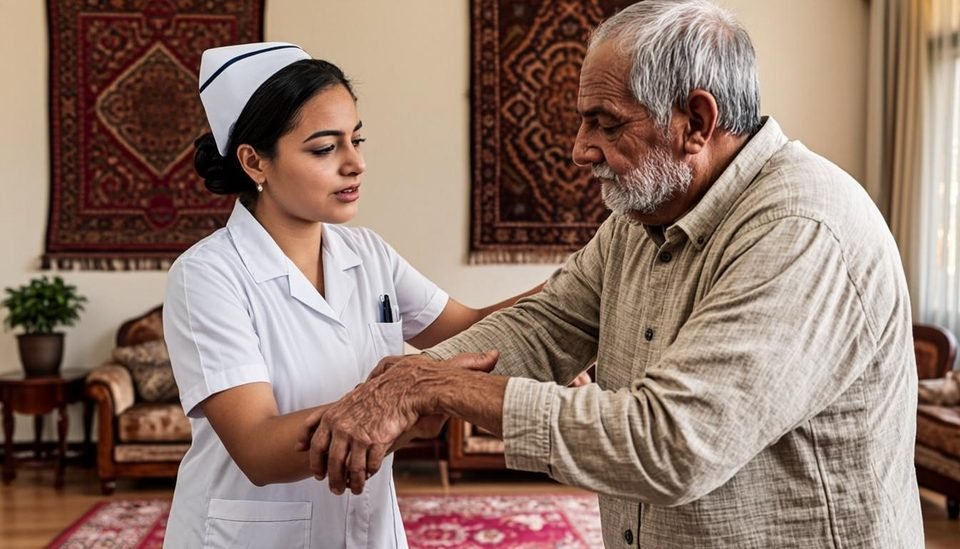
Home nursing care provides essential medical support that families alone cannot offer. Registered nurses manage medication administration, monitor vital signs, provide wound care, manage urinary catheters and feeding tubes, and educate family members on proper care techniques. For stroke patients with swallowing difficulties (dysphagia), nurses ensure safe feeding practices and monitor for signs of aspiration pneumonia, a common and dangerous complication.
ICU-level care at home is available for patients who have experienced severe strokes and require continuous monitoring during the early stages of recovery. This service includes vital sign monitoring, ventilator management if needed, and round-the-clock nursing supervision, all within the patient's home environment.
Doctor home visits ensure that the patient's recovery is regularly assessed by a qualified physician. The doctor evaluates neurological function, adjusts medications, reviews laboratory results, and coordinates the overall care plan. Regular medical oversight is critical for preventing complications and ensuring that rehabilitation is progressing appropriately.
Specialised stroke recovery programmes at home provide a comprehensive, multidisciplinary approach that addresses all aspects of the patient's recovery, from physical rehabilitation to emotional support and family education.
When to Seek Emergency Help
Time is the most critical factor in stroke outcomes. If you or anyone around you experiences any of the following symptoms, seek emergency medical help immediately by calling an ambulance or proceeding to the nearest hospital:
- Sudden numbness or weakness of the face, arm, or leg, especially on one side of the body
- Sudden confusion, difficulty speaking, or difficulty understanding speech
- Sudden trouble seeing in one or both eyes
- Sudden severe headache with no known cause
- Sudden difficulty walking, dizziness, or loss of balance and coordination
Do not wait to see if symptoms improve. Do not drive yourself to the hospital. Do not take aspirin or any medication before a doctor has determined the type of stroke, because aspirin can worsen a hemorrhagic stroke. Every minute of delay results in the death of approximately 1.9 million brain neurons, making rapid response essential for minimising permanent damage.
For patients already recovering from a stroke at home, families should also watch for signs of complications that require urgent medical attention, including new or worsening weakness, sudden changes in consciousness, difficulty breathing, chest pain, high fever, and signs of deep vein thrombosis such as swelling and pain in one leg. Home nursing services can help families identify these warning signs early and respond appropriately.
Preventing a Recurrent Stroke
Patients who have experienced a stroke or TIA are at significantly increased risk of having another stroke. Secondary prevention strategies are therefore a critical part of long-term care. The following measures are supported by strong clinical evidence:
- Strict blood pressure management: Maintaining blood pressure below 130/80 mmHg is one of the most effective ways to prevent recurrent stroke. Regular monitoring and medication adherence are essential.
- Medication compliance: Taking all prescribed medications, including antiplatelets or anticoagulants, blood pressure medications, statins, and diabetes medications, exactly as directed.
- Dietary modifications: Adopting a diet low in salt, saturated fats, and processed foods, and rich in fruits, vegetables, whole grains, and lean proteins. Reducing ghee and oil consumption is particularly important in the Pakistani dietary context.
- Regular physical activity: Engaging in at least 150 minutes of moderate-intensity exercise per week, as approved by the treating physician. Even gentle walking and supervised physiotherapy exercises contribute to cardiovascular health.
- Smoking cessation: Quitting smoking immediately and completely. Smoking doubles the risk of ischemic stroke and quadruples the risk of hemorrhagic stroke.
- Regular health check-ups: Scheduling periodic doctor home visits and lab tests to monitor risk factors and adjust treatment as needed.
Living with Stroke: Daily Management at Home
Adjusting to life after a stroke requires patience, determination, and practical strategies. For patients recovering at home in Lahore, establishing a structured daily routine helps create a sense of normalcy and supports the rehabilitation process. Families play a central role in this phase, providing both physical assistance and emotional encouragement.
Creating a safe home environment is a priority. This includes removing tripping hazards such as loose rugs and electrical cords, installing grab bars in bathrooms and near staircases, ensuring adequate lighting throughout the home, arranging furniture to allow clear pathways for walking aids, and placing frequently used items within easy reach. These modifications reduce the risk of falls, which can be particularly dangerous for stroke patients who may have balance problems or weakness on one side.
Nutrition plays an important role in recovery. A balanced diet that supports cardiovascular health, manages blood sugar levels, and maintains a healthy weight is recommended. Many stroke patients also have swallowing difficulties that require modified food textures and thickened liquids. Home nurses can provide guidance on safe feeding techniques and appropriate food preparation.
Emotional and psychological well-being is equally important. Post-stroke depression affects approximately one-third of stroke survivors and can significantly impair recovery. Feelings of frustration, sadness, anxiety, and grief are common and normal. Family support, engagement in enjoyable activities, social interaction, and professional counselling when needed all contribute to mental health during recovery.
Consistency in rehabilitation exercises is key. Patients who perform their prescribed exercises regularly at home, in addition to their formal physiotherapy sessions, tend to achieve better outcomes. Family members can help by encouraging exercise adherence, assisting with exercises as instructed by the physiotherapist, and celebrating even small improvements in function.
For families in Lahore managing a loved one's stroke recovery, Hum Home Care provides a comprehensive range of in-home services designed to support every stage of the journey, from acute recovery through long-term rehabilitation and secondary prevention.